
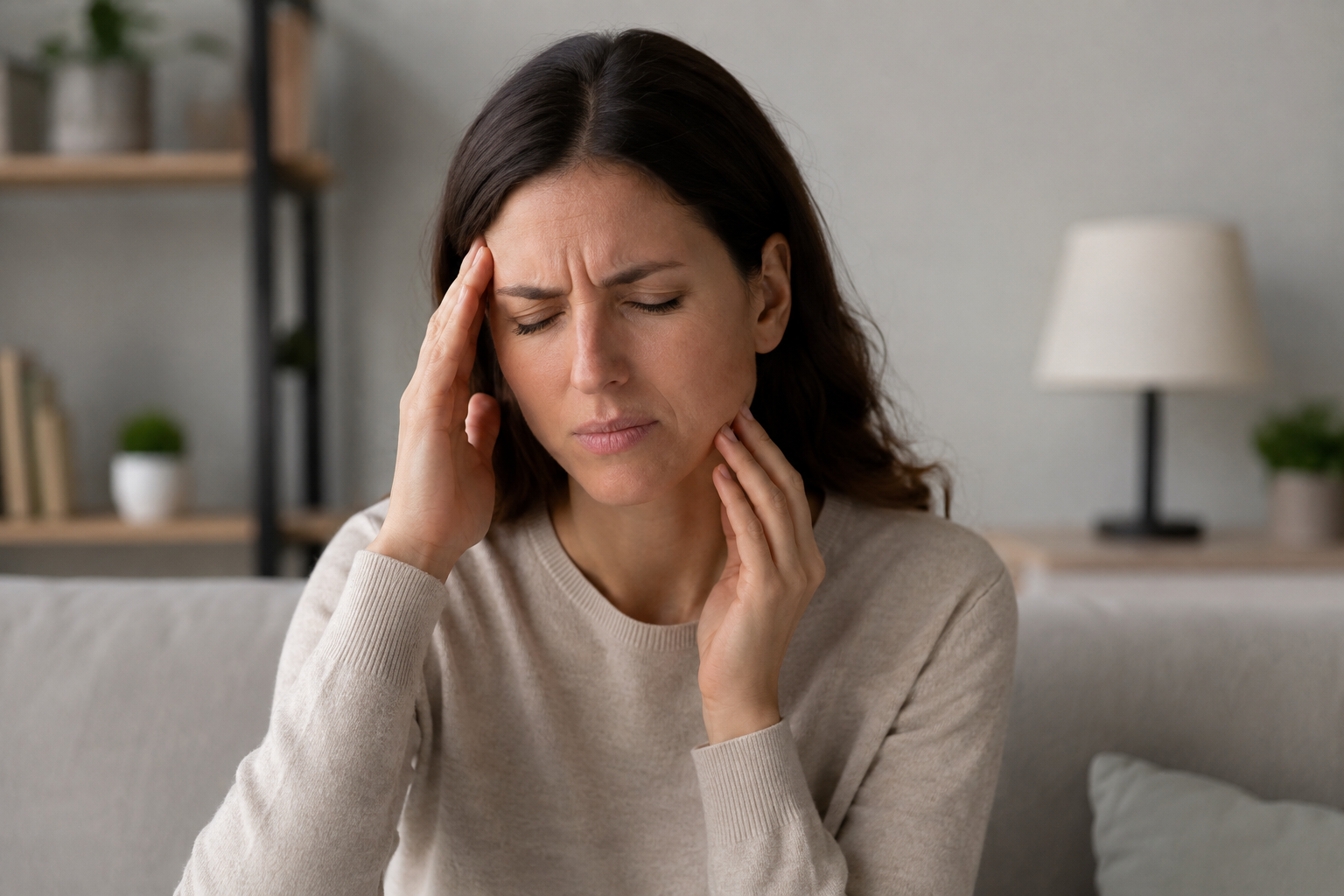
Does your jaw hurt? Do you get frequent headaches? Are your ears clicking when you chew? Do you wake up with a stiff jaw each morning? While these issues may feel like unrelated problems, they can actually all be symptoms of dysfunction in your temporomandibular joint, also known as TMJ.
The temporomandibular joints connect your jawbone to your skull. They allow you to talk, chew, yawn and otherwise move your mouth comfortably. Irritation, strain or dysfunction in these joints and the muscles around them is known as temporomandibular disorder, also known as TMD.
At Cyprus Family Dental we offer TMJ treatment in Magna, UT and can offer professional treatment as well as tips for how to reduce your symptoms from home. Below are seven symptoms that could indicate your jaw pain or headaches are caused by TMJ.
1. Frequent Jaw Pain or Tenderness
Pain or tenderness in your jaw is one of the most obvious symptoms of TMJ disorder.
You may experience jaw pain:
- Near the jaw joint in front of the ear
- Along the lower jaw
- While chewing
- When opening your mouth widely
- After talking for long periods
- First thing in the morning
Your jaw pain may be persistent or intermittent based on how frequently you use the joint and muscles. If pain persists or begins to cause problems with eating and daily activities, consider having your jaw checked.
2. Recurring Headaches
While TMJ disorder does not always cause headaches, tension in the jaw can play a role in them.
The muscles of mastication interact with muscles around the temples, face, and head. If those muscles are often tense (as is common with clenching/grinding), they can play a factor in frequent headaches.
These headaches may:
- Begin around the temples
- Are strongest after waking up
- Occur with jaw soreness
- Become worse after chewing
- Are accompanied by facial tension
Cyprus Family Dental adds that jaw pain, clicking, and headaches may also be signs of TMJ disorders.
If you frequently experience headaches with jaw pain/tightness, your dentist can help you figure out if your bite or jaw joint is part of the problem.
3. Clicking, Popping, or Grinding Sounds
Does your jaw click or pop when you open your mouth?
While clicking jaw sounds once in a while are normal if there is no pain associated, having your jaw frequently click/pop/grind when accompanied by pain or limited movement may be indicative of a TMJ disorder.
- Eating
- Yawning
- Talking
- Opening your mouth widely
At Cyprus Family Dental, we see clicking, popping, and locking of the jaw as potential symptoms of a disorder with your temporomandibular joint.
Schedule an evaluation if the sound becomes more frequent or painful.
4. Your Jaw Feels Stiff or Locks
Your jaw should feel like it moves smoothly if it’s healthy.
If you have a TMJ disorder you may notice stiffness or tightness when opening and closing your mouth.
Some people report feeling like their jaw is temporarily stuck or “locked” in an open or closed position.
Other symptoms include:
- Difficulty opening your mouth fully
- Tightness when yawning
- Limited jaw movement
- Pain when biting into larger foods
It’s important that you seek treatment if you experience jaw locking, particularly if it happens often.
5. You Wake Up With Jaw Soreness
You may be clenching or grinding your teeth while you sleep if you wake up tired or sore jaw.
Teeth grinding can exert extra pressure on the jaw muscles and joints.
Symptoms of grinding your teeth also include:
- Morning headaches
- Sensitive teeth
- Worn or flattened teeth
- Facial soreness
- Tight jaw muscles
Sleep bruxism doesn’t always cause TMJ disorders but teeth grinding and clenching can cause jaw pain for some patients. Even though bruxism is linked to jaw pain, not every teeth clencher or grinder will develop TMJ disorder.
Your dentist can examine your teeth for signs of grinding and evaluate if a mouth guard is right for you.
6. Pain Around Your Ear or Face
Since the temporomandibular joint sits right in front of your ear, TMJ pain can mimic an ear condition.
You may have:
- Ear-area discomfort
- Facial aching
- Pressure around the jaw
- Pain around the temples
- Tenderness in the cheeks
When there is no infection or other clear cause found during an ear exam, sometimes the pain is originating from the adjacent jaw joint or muscles.
Ongoing facial or ear pain should be checked out to determine the underlying cause.
7. Your Bite Feels Different
Sometimes when you have a TMJ disorder, you may notice that your teeth don’t seem to meet the way they used to.
You might notice that:
- Your bite is uneven
- Your teeth meet differently than they used to
- Chewing feels uncomfortable
- Your jaw shifts when closing
During a dental exam, we can determine how well your upper and lower teeth fit together. We can also discover if your bite is affecting your jaw- joint health. Here at Cyprus Family Dental we offer bite evaluation with all TMJ assessments.
What Causes TMJ Disorders?
Sometimes there is more than one cause…
Possible causes of TMJ disorders include:
- Jaw injuries
- Arthritis
- Teeth grinding or clenching
- Muscle tension
- Bite-related issues
- Stress that increases jaw clenching
There are times when more than one factor plays a role, so it’s important to get a comprehensive evaluation before treatment is recommended.
How Can a Dentist Help With TMJ Pain?
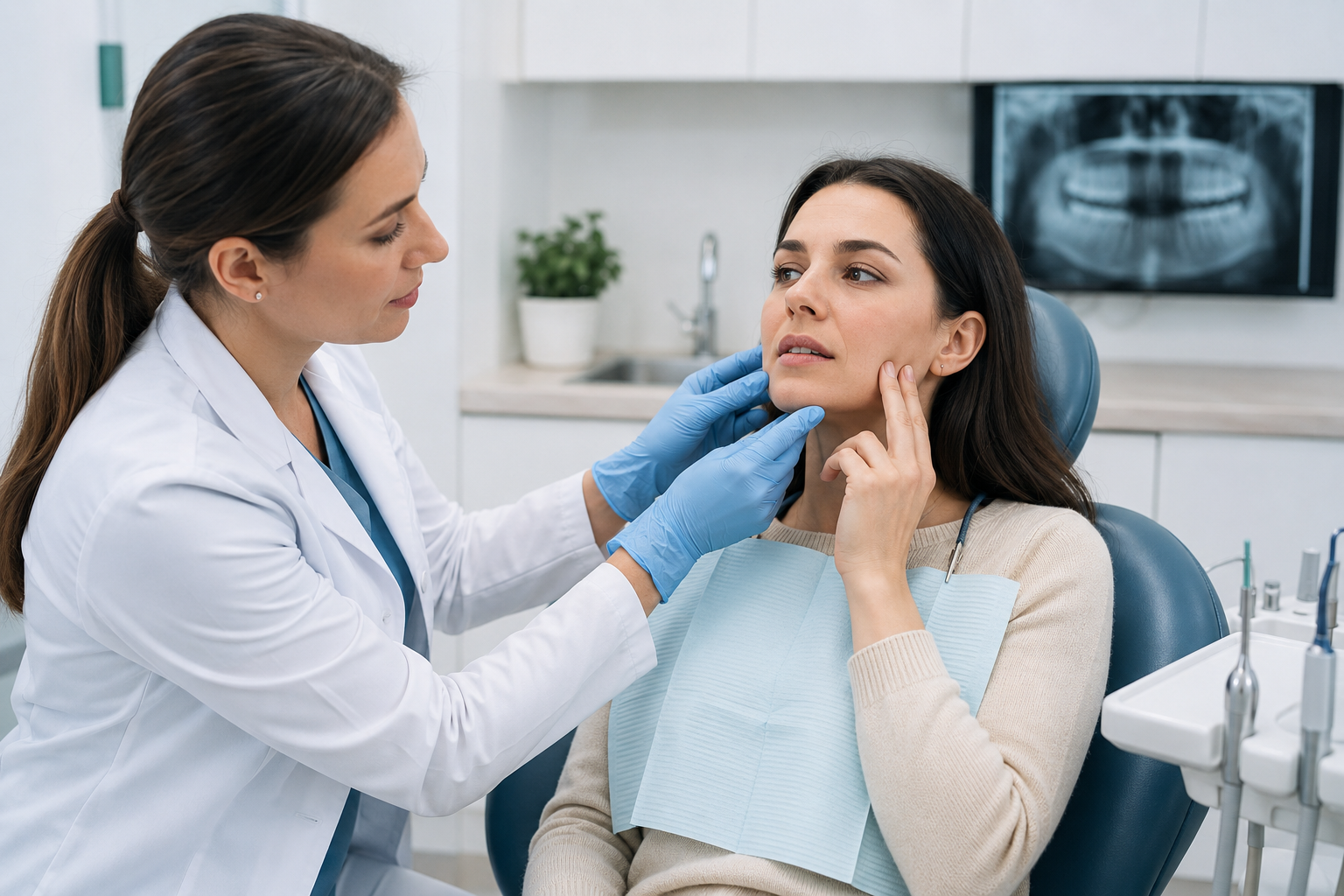
Treatment will vary, depending on what is causing your symptoms and how severe they are.
Your dentist will examine:
- Jaw movement
- Your bite
- Tenderness around the joint
- Signs of grinding
- Tooth wear
- Jaw clicking or popping
- Muscle tension
Cyprus Family Dental has many TMJ treatment options that include appliances/guards as well as jaw exercises you can do at home to relieve discomfort.
Every patient isn’t required to receive the same type of treatment. It’s important to first determine what is causing your symptoms.
Can TMJ Symptoms Go Away on Their Own?
Sometimes a dull jaw ache will feel better if you rest your jaw and change some habits. Others may linger or get worse. Here are some home remedies that may help with temporary discomfort:
- Avoiding very hard or chewy foods
- Limiting excessive gum chewing
- Being aware of daytime clenching
- Using gentle jaw exercises if recommended
- Avoiding unnecessary strain on the jaw
If you have jaw pain most days, your pain is intense, or you are unable to open your mouth fully or eat comfortably, see your doctor or dentist.
When Should You See a Dentist for Jaw Pain?
Schedule an appointment if you experience:
- Jaw pain that does not improve
- Recurring headaches with jaw tension
- Painful clicking or popping
- Difficulty opening your mouth
- Jaw locking
- Morning jaw soreness
- Significant tooth grinding
- Facial pain
- Changes in your bite
Your symptoms could be caused by a variety of issues. However, seeing your dentist can help determine if your temporomandibular joint is the cause.
TMJ Treatment in Magna, Utah
Jaw pain and chronic headaches can make daily tasks such as eating, talking and sleeping painful. At Cyprus Family Dental, we understand how difficult living with TMJ symptoms can be. If you are struggling with any of the symptoms mentioned above, our team can examine your jaw, bite and teeth to help determine what may be causing your pain. We offer comprehensive TMJ treatment in Magna, UT and provide tips to help you manage your pain.
Don’t let jaw pain, clicking, headaches or stiffness prevent you from living your life to the fullest. Give Cyprus Family Dental a call today at (801) 250-0203 or fill out our online form to schedule your TMJ evaluation and learn about your treatment options. We’re here to help!