
Many people envision a CPAP machine when they think about sleep apnea treatment, but dentists may be able to help some patients as well.
Sleep apnea is characterized by periods of stopped or restricted breathing during sleep. Not only is this disruptive to sleep in general, but it can leave you feeling fatigued even after a full night of rest.
Dental sleep apnea treatment at Cyprus Family Dental in Magna, Utah may include custom oral appliances.
Learn more about what Magna patients should know regarding sleep apnea and the dentist’s role.
What is Sleep Apnea?
Sleep apnea is a disorder characterized by problems breathing during sleep. The most prevalent type of sleep apnea is called obstructive sleep apnea or OSA for short.
During episodes of obstructive sleep apnea, soft tissues in the throat will collapse and partially or fully block the airway. Normal breathing is briefly and repeatedly interrupted, causing disturbance of the body’s sleep cycle.
It’s possible to have sleep apnea and not know it because your breathing is interrupted during sleep.
Warning signs you may experience include:
- Loud snoring
- Gasping or choking during sleep
- Waking up frequently
- Morning headaches
- Dry mouth upon waking
- Daytime fatigue
- Difficulty concentrating
- Forgetfulness
- Irritability
- Feeling tired despite getting enough hours of sleep
Sleep apnea can cause poor sleeping habits which Cyprus Family Dental explains can lead to lack of focus and forgetfulness.
How Can a Dentist Help With Sleep Apnea?
Dentists spend their days treating teeth, jawbone, tongue and other structures in the mouth. Because the jaw, tongue and other structures can affect the airway, dentists trained in dental sleep medicine can sometimes treat patients for obstructive sleep apnea.
A common dental treatment for snoring and sleep apnea is oral appliance therapy.
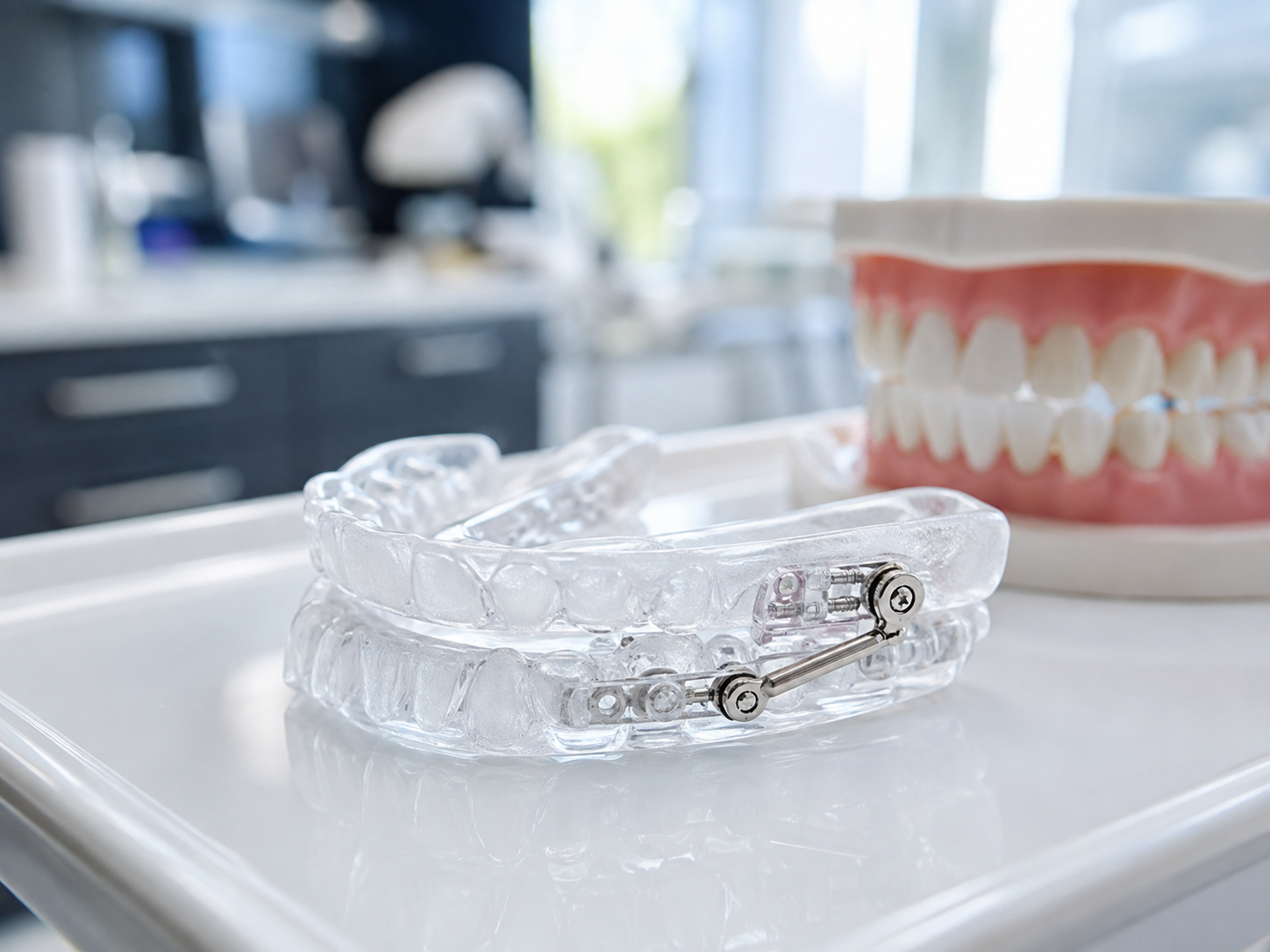
Custom oral appliances are worn during sleep to help keep the lower jaw, tongue or other soft tissue from collapsing and blocking the airway. Cyprus Family Dental provides custom oral appliances as a treatment option for certain sleep apnea patients who don’t want to undergo surgery.
What is an Oral Appliance for Sleep Apnea?
An oral appliance for sleep apnea may resemble a mouthguard, but it has a very different function.
Instead of protecting the teeth from injury, the appliance holds your airway open while you sleep.
One type is called a mandibular advancement device. This device gently pushes the lower jaw forward.
Sliding the jaw forward slightly can also move the tongue and surrounding tissue so they don’t block your airway.
Cyprus Family Dental explains that oral appliance therapy is custom-fitted to move the jaw, tongue, and soft tissues to prevent the airway from collapsing.
Who May Benefit From Oral Appliance Therapy?
Oral appliances may be a treatment option for those with mild to moderate obstructive sleep apnea, or when a patient can’t tolerate CPAP treatment. At Cyprus Family Dental we know oral appliances are commonly used to treat mild to moderate OSA and for some patients who can’t tolerate CPAP.
Factors such as…
- The type of sleep apnea
- Severity of the condition
- Jaw and dental anatomy
- Overall health
- Condition of the teeth and gums
- Previous treatment history
…can play a role in determining if oral appliance therapy is right for you. While a dentist can assess your mouth and jaw structure, it’s important to get sleep apnea correctly diagnosed and treated with the help of trained medical professionals.
Is an Oral Appliance Easier to Use Than CPAP?
For some people, yes.
CPAP is an effective and widely used treatment that works by delivering continuous air pressure through a mask to help keep the airway open.
However, some patients find wearing the mask uncomfortable or have difficulty adapting to the equipment.
Possible advantages of an oral appliance include:
- Compact size
- No mask
- No external tubing
- Easy portability
- Quiet operation
- Custom fit
- No surgery required
Cyprus Family Dental explains that oral appliances are small, non-invasive, and easily portable than bulky CPAP machines.
However, that doesn’t mean the oral appliance is inherently superior to CPAP. Your best option depends on the patient and severity of the case.
Can an Oral Appliance Help With Snoring?
Possibly.
Snoring occurs when vibrating tissues in your airway bounce off each other as air rushes past during a period of narrowing.
If an advancement appliance helps improve the airflow in your airway, then it stands to reason it could help alleviate snoring for some people. After all, snoring reduction is listed as one of the benefits of oral appliance therapy by Cyprus Family Dental.
That being said, loud snoring or chronic snoring should never be accepted as just an annoyance. Snoring is occasionally a sign of obstructive sleep apnea, especially when it’s combined with gasping or choking, witnessed breathing pauses, or excessive daytime sleepiness.
What Happens During a Dental Sleep Apnea Consultation?
It depends on your situation. In general, your dentist will examine:
- Your teeth
- Your bite
- Jaw position
- Jaw movement
- Oral anatomy
- Existing dental work
- Signs of teeth grinding
Dr. Cantwell will also ask about snoring, restless sleep, morning headaches, daytime sleepiness or trouble concentrating. If it’s determined that oral appliance therapy may help you, the device is made specifically for your mouth. There are no cookie-cutter appliances; they are custom fit. Cyprus Family Dental provides custom dental appliances.
Why Does a Custom-Fitted Appliance Matter?
Every bite is different.
Your mouth is too.
An Appliance built by your dentist is built with the placement of your teeth and jaw in mind. Ideally, we want to move your jaw enough to allow for proper airflow, without sacrificing comfort as much as possible.
- Fit
- Comfort
- Bite changes
- Jaw soreness
- Appliance wear
…and more.
Attempting to treat sleep apnea with a retail mouthguard is no substitute for a custom made appliance built to treat sleep disordered breathing.
Can Sleep Apnea Affect Your Daytime Health?
Yes. Poor-quality sleep can lead to disruptions in how you feel and function while you’re awake.
A person living with untreated sleep apnea might experience:
- Persistent tiredness
- Difficulty concentrating
- Morning headaches
- Mood changes
- Forgetfulness
- Reduced alertness
Cyprus Family Dental points out tiredness, trouble focusing, and memory loss as three symptoms patients may suffer from when sleep apnea inhibits their ability to get restful sleep.
There are serious consequences to lack of quality sleep including car accidents as a result of extreme drowsiness while driving. If you are experiencing any of these symptoms persistently, they should not be ignored.
What if You Already Use a CPAP Machine?
Don’t discontinue your doctor-prescribed CPAP therapy just because dental appliances are an option.
If you’ve had issues with CPAP comfort or compliance, be sure to bring those issues to the doctor who is overseeing your sleep apnea treatment.
You may be a good candidate for OAT, or you may need to continue with CPAP use or try another treatment option.
Ask your dentist if your teeth and jaw structure would allow for the use of an oral appliance to treat your sleep apnea.
Can a Dentist Diagnose Sleep Apnea?
Your dentist can identify some signs and symptoms that are common in sleep apnea patients. We’ve mentioned before that your sleep habits may be called into question during a visit to the dentist.
Sleep apnea is a sleep disorder that may require confirmation and examination by your doctor or a sleep specialist. Many times, a sleep study will be needed.
Remember, your dentist may be part of your treatment team, but by no means will your dentist diagnose you with sleep apnea on their own.
When Should You Ask About Sleep Apnea Treatment?
Talk to your doctor about sleep apnea if you regularly experience any of the following:
- Loud snoring
- Waking up gasping
- Witnessed pauses in breathing
- Persistent daytime fatigue
- Morning headaches
- Difficulty concentrating
- Poor-quality sleep
- Waking with a dry mouth
Talk to your doctor about dental oral appliance therapy if you’ve been diagnosed with obstructive sleep apnea and don’t tolerate CPAP well.
Sleep Apnea Treatment in Magna, Utah
Sleep apnea can impact your energy levels, focus and quality of sleep. However, treatment isn’t always the same for every patient.
In certain patients with obstructive sleep apnea, a custom oral appliance can offer a comfortable and convenient solution for keeping the airway open while you sleep.
Sleep apnea dentist in Magna, Utah, Cyprus Family Dental provides sleep apnea treatment with custom oral appliance therapy for qualifying patients.
Contact us today at (801) 250-0203 if you’re worried about snoring, daytime sleepiness, quality of sleep or if you have been diagnosed with sleep apnea. Schedule a consultation at Cyprus Family Dental to see if you are a candidate for dental sleep apnea treatment.