

Will a Dental Plan Cover Veneers?
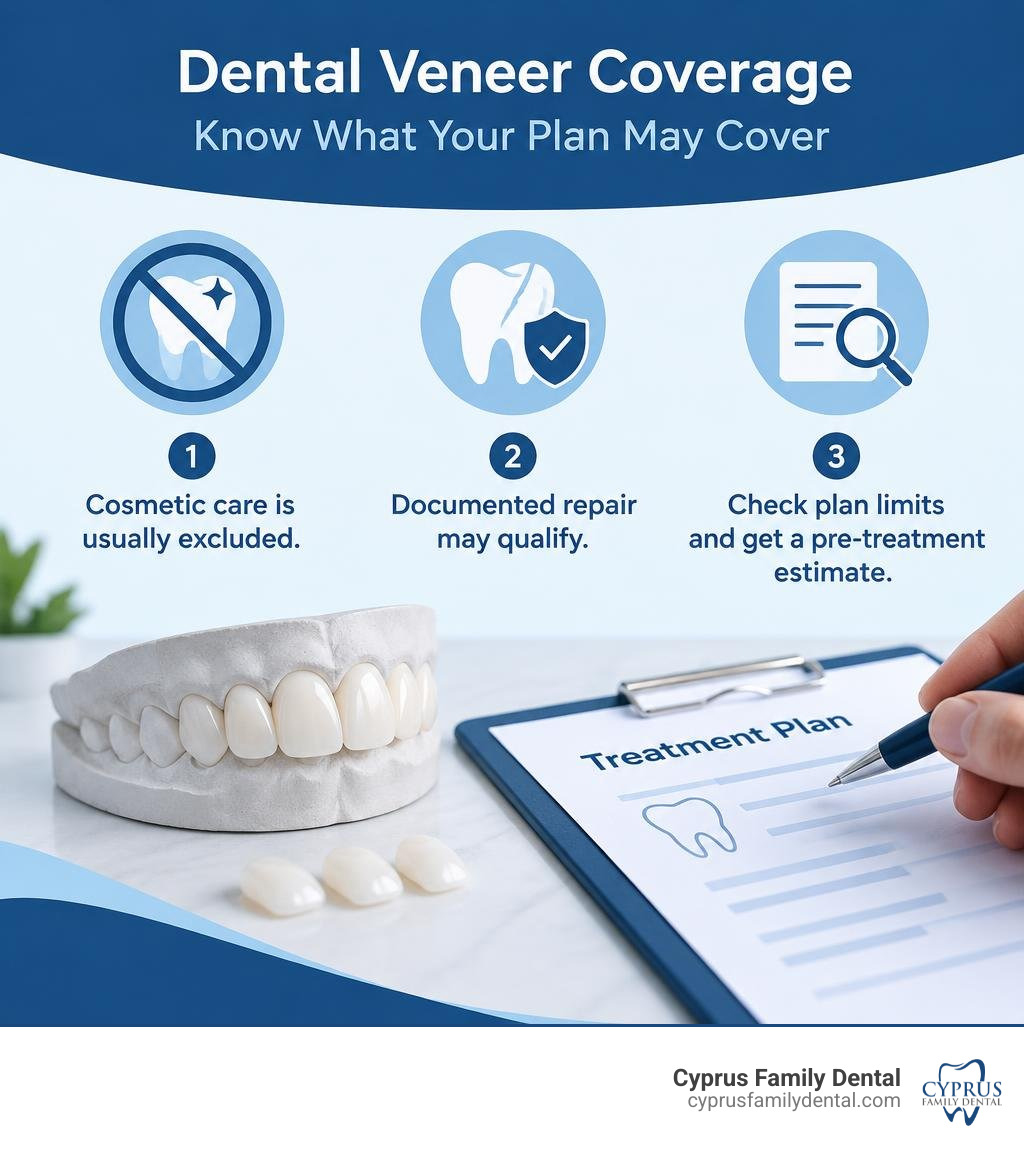
A dental plan for veneers usually will not pay for treatment done only to improve how teeth look. Some plans may help pay when a veneer repairs a damaged tooth, but coverage depends on the policy and the reason for treatment. Before you commit, ask your dentist for a written cost estimate and have your insurer review the proposed treatment.
Veneers are thin coverings placed on the front of teeth. They can improve the look of chips, stains, or gaps, but the cost can leave families with a large bill if coverage is unclear. At Cyprus Family Dental in Magna, you can discuss your options and expected costs before making a decision.
Does Your Veneers Dental Plan Cover Cosmetic or Restorative Treatment?
Navigating insurance starts with understanding the difference between general dentistry and cosmetic dentistry. General and restorative dentistry focus on diagnosing, preventing, and repairing functional oral health issues such as tooth decay, infection, and physical trauma. Cosmetic dentistry, on the other hand, centers primarily on enhancing the aesthetic appearance of your teeth, color, shape, alignment, and overall smile harmony.
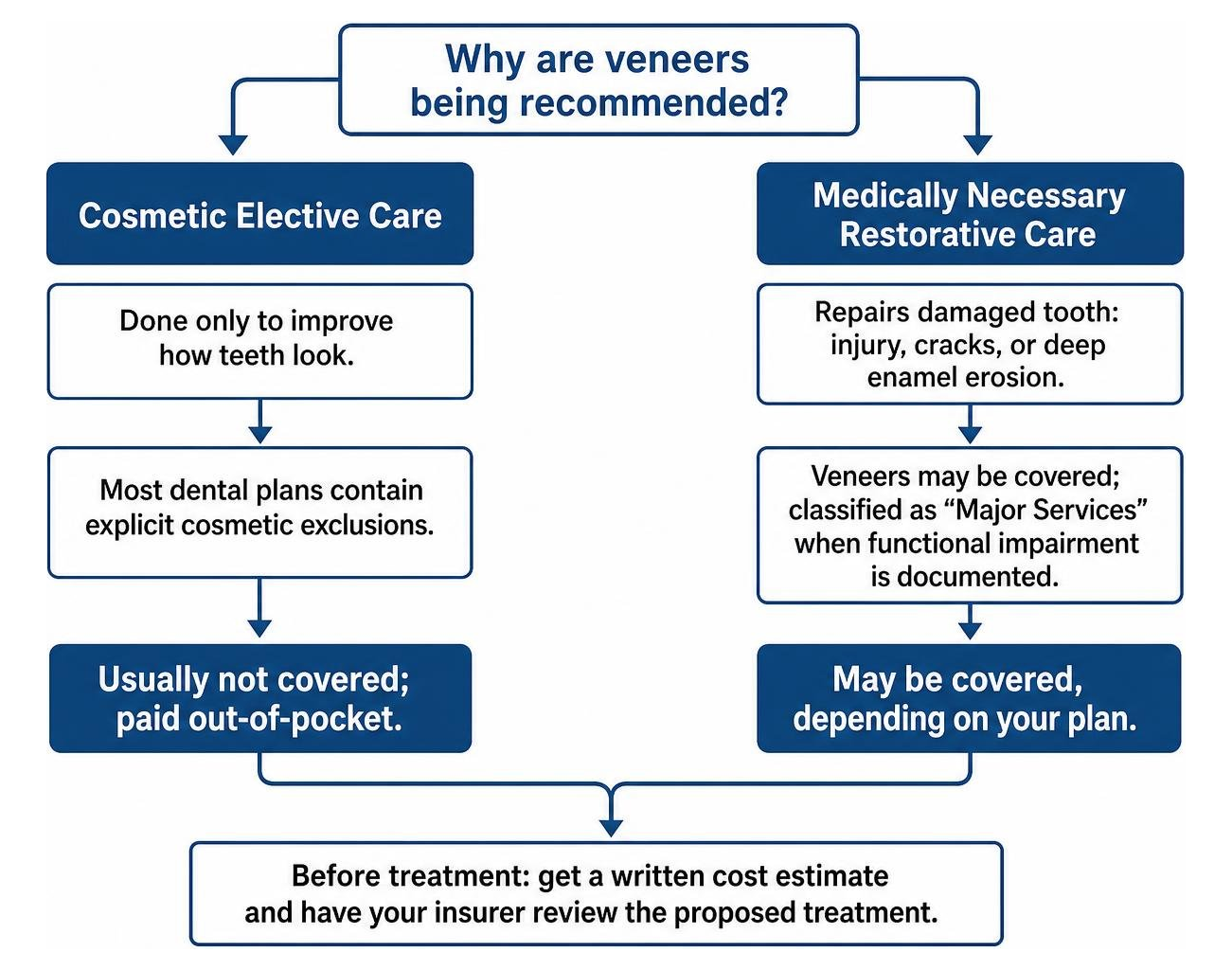
Standard dental benefit policies draw a strict line between elective aesthetic upgrades and medically necessary restorations. Most dental plans contain explicit cosmetic exclusions, meaning any procedure completed purely to enhance visual aesthetics is paid entirely out-of-pocket. However, when an underlying issue threatens the structural integrity of your tooth—such as severe enamel loss, fractured cusps, or traumatic injury—the line between cosmetic and restorative care begins to blur.
How a Typical Veneers Dental Plan Classifies Restorative Needs
For an insurance provider to consider paying for a veneer, our dental team must establish clear functional impairment. If you have suffered an injury, cracked a front tooth, or experienced deep enamel erosion that leaves dentin exposed and painful, the veneer is no longer serving an exclusively cosmetic purpose; it is actively restoring compromised dental anatomy.
In these circumstances, policies that offer coverage classify veneers under their “Major Services” tier. Securing this classification requires comprehensive clinical documentation:
- High-resolution clinical photographs highlighting the structural break or decay
- Diagnostic periapical and bitewing X-rays showing the tooth’s internal root and bone health
- Detailed periodontal and restorative chart notes outlining pain, bite interference, or structural risk
- Formal trauma or accident incident reports when applicable
- A pre-treatment estimate submitted directly to your benefits administrator before starting care
Cosmetic Exclusions and Least Costly Alternative Clauses
Even when structural damage is present, many standard PPO dental plans enforce what is known as an Alternative Benefit Clause (often called a “Least Costly Alternative” or LCA provision). Under an LCA clause, if multiple clinical treatments can resolve an issue, the insurance carrier will only provide benefits based on the least expensive option.
For example, if a cracked front tooth requires structural coverage, your insurer might approve reimbursement for a standard dental crown or direct resin filling instead of a custom veneer. If you choose the veneer, the plan pays only the downgrade amount, leaving you responsible for the remaining balance. Additionally, standard annual maximums—which often cap yearly payouts between $1,000 and $2,000 per individual—mean that even approved restorative claims will only cover a portion of multi-tooth care.
Average Veneer Costs and Factors Influencing Price
The out-of-pocket investment for veneers depends heavily on the materials used, laboratory craftsmanship, and the complexity of your smile goals. Nationally, individual veneer costs range from $500 to $2,500 per tooth, with a full arch makeover (typically six to eight teeth) averaging around $13,954.
| Veneer Type | Average Cost Per Tooth | Expected Lifespan | Enamel Preparation Required | Primary Benefit |
|---|---|---|---|---|
| Porcelain Veneers | $900 – $2,500 | 10–20 Years | Minimal (0.5 mm – 1.0 mm) | Superior stain resistance, life-like translucency |
| Composite (Chairside) | $500 – $1,400 | 5–7 Years | Very Little to None | Completed in a single visit, lower upfront cost |
| Composite (Lab-Milled) | $800 – $2,300 | 5–10 Years | Minimal | Higher durability than direct chairside resin |
| No-Prep / Lumineers | $800 – $2,000 | 10–20 Years | None (Ultra-thin application) | Reversible, preserves full natural enamel structure |
At Cyprus Family Dental, we create custom dental veneers designed to match your facial profile, bite, and natural shading. Factors that influence total treatment cost include:
- Material Selection: High-grade dental ceramics like lithium disilicate mimic the light-reflecting qualities of natural enamel better than standard resins but require specialized dental laboratory fabrication.
- Number of Teeth: Restoring a single chipped central incisor requires meticulous single-tooth shade matching, whereas a complete smile line redesign involves coordinated multi-unit fabrication.
- Tooth Alignment and Prep Work: As noted in European clinical guidelines on veneers for minor alignment, minor spacing and mild rotations can often be corrected with veneers, though significant misalignments may require minor preliminary enamel contouring.
Porcelain vs. Composite Resin Veneers
Porcelain and composite resin represent two distinct approaches to smile transformation. Porcelain shells are custom-crafted in a certified dental laboratory from ultra-durable ceramic blocks. They resist stains from coffee, tea, and red wine and provide a natural, luminous look that routinely lasts between 10 and 20 years with proper oral care.
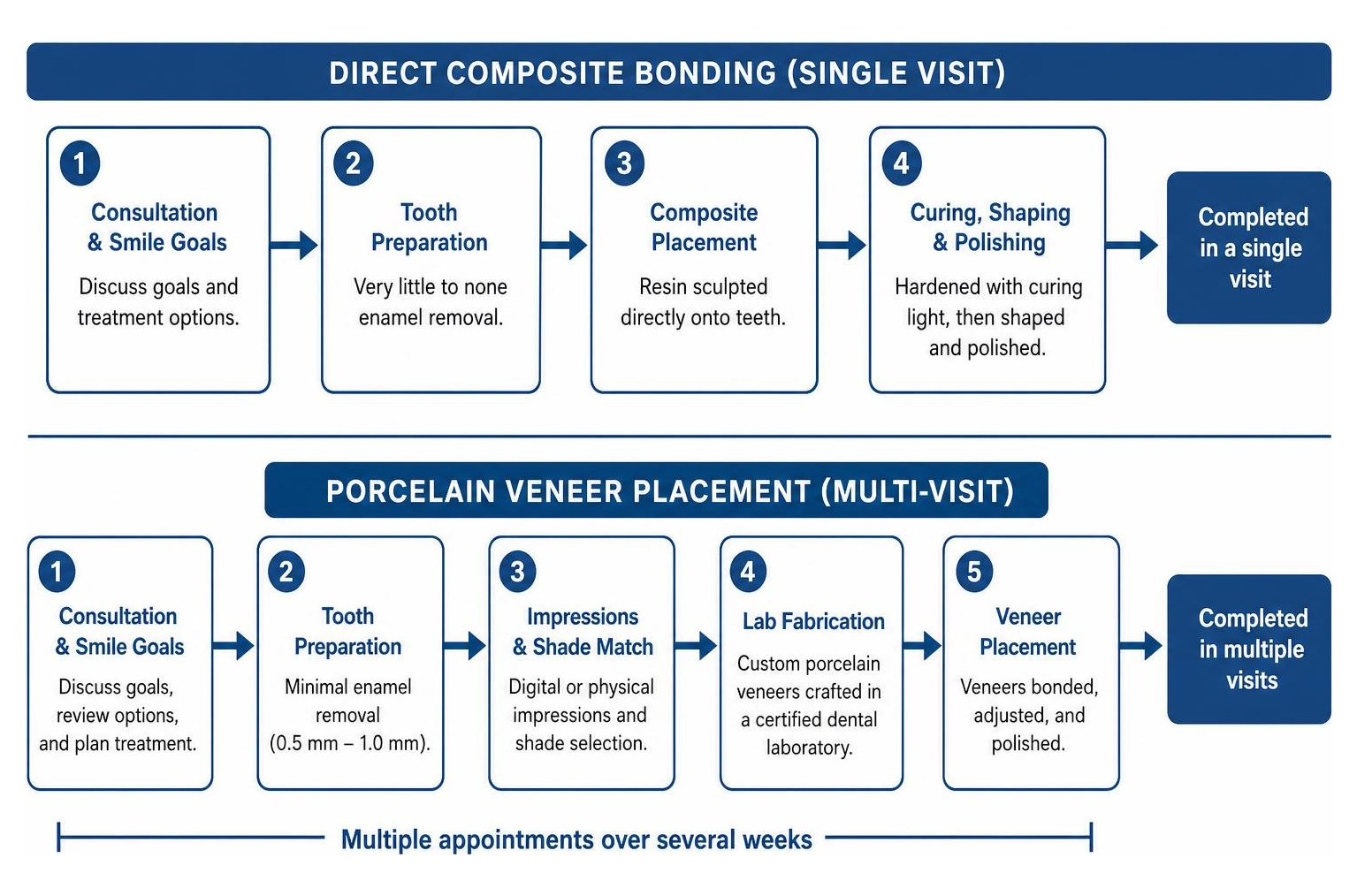
Composite veneers, by contrast, are sculpted directly onto your teeth using a specialized resin material hardened with a high-intensity curing light. While composite resin offers a fast and affordable alternative—frequently completed in a single appointment—it is more porous than porcelain. This makes composite more susceptible to surface chipping and gradual discoloration over time, typically requiring polishing or replacement every 5 to 7 years.
Full Smile Makeover vs. Single Tooth Costs
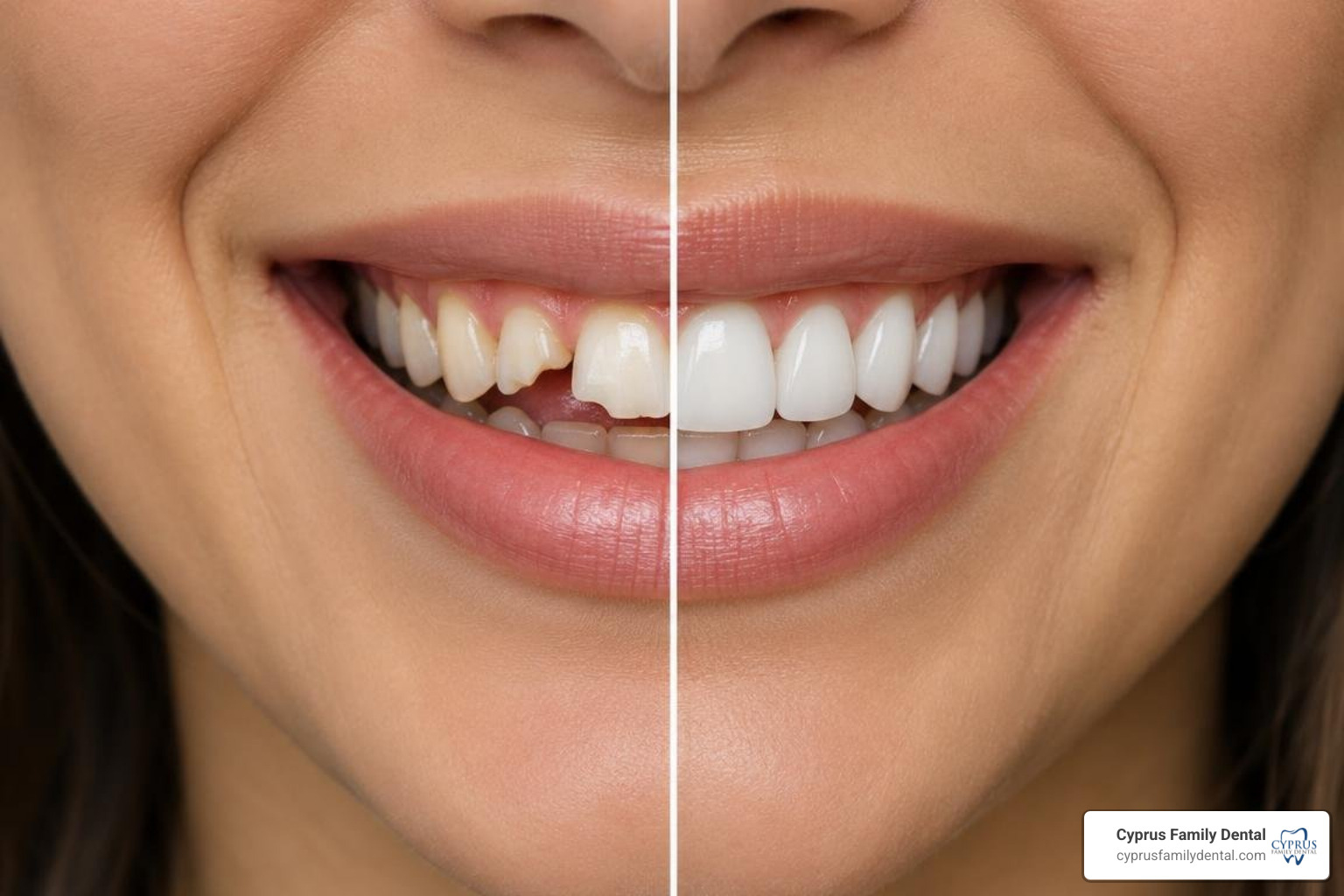
Treating a single tooth versus undergoing a full arch smile transformation involves different planning considerations:
- Single-Tooth Restorations: Often prompted by accidental chipping, isolated discoloration, or localized enamel wear. The primary clinical challenge is matching the exact shade, translucency, and surface texture of adjacent natural teeth.
- Full Smile Makeovers (6–8 Units): Addresses the entire visible “aesthetic zone” when smiling. This approach allows us to establish a brand-new shade, refine your smile width, correct mild crowding, and create complete symmetry across your upper or lower jaw. While the total investment is higher, multi-unit cases provide comprehensive aesthetic control and long-term uniform wear.
Financing Options and Navigating Your Veneers Dental Plan
When an insurance policy excludes elective aesthetic enhancements, having a clear financial roadmap makes treatment accessible. Navigating out-of-pocket expenses is straightforward when you combine modern practice options with comprehensive cosmetic dentistry solutions.
Maximizing Your Veneers Dental Plan Benefits Before Year-End
If your veneer treatment qualifies as partially restorative due to trauma or structural damage, strategic timing can help you maximize your annual benefits. Most dental insurance plans operate on a calendar-year cycle, resetting deductibles and annual benefit maximums on January 1st.
If you require multi-tooth restorations, our team can help you phase your care across benefit periods. By completing initial diagnostic preparation and initial units in November or December, and placing remaining units in January, you can apply two separate annual maximums toward your overall treatment plan, reducing your out-of-pocket costs.
Alternative Payment Methods: HSA, FSA, and In-House Financing
To cover expenses not handled by insurance, consider taking advantage of these payment methods:
- Health Savings Accounts (HSAs) & Flexible Spending Accounts (FSAs): These tax-advantaged accounts allow you to pay for eligible dental expenses using pre-tax dollars. When veneers are prescribed to restore a broken tooth or resolve functional bite issues, HSA and FSA funds can often be applied directly.
- Third-Party Healthcare Financing: Programs like CareCredit allow patients to break total treatment costs into manageable monthly installments, often with 0% interest promotional periods ranging from 6 to 24 months.
- In-House Payment Arrangements: We work closely with families across Magna to establish realistic, transparent payment schedules that align with your household budget without surprise add-on fees.
Effective Alternatives When Veneers Aren’t Covered
If veneers fall outside your current budget or insurance parameters, several conservative cosmetic and restorative procedures can dramatically improve your smile while preserving healthy tooth enamel.

Professional Teeth Whitening and Enamel Care
When discoloration is your primary aesthetic concern, whitening offers significant visual results at a fraction of the cost of porcelain restorations. Professional in-office whitening lifts deep extrinsic stains caused by foods, beverages, and natural aging, while custom take-home trays provide steady, controlled shade improvement.
Before investing in irreversible enamel reshaping, many patients achieve their ideal shade through professional teeth whitening. Whitening can also be combined with single-tooth veneers: by brightening your natural teeth first, your custom porcelain can be matched to a lighter baseline shade.
Direct Dental Bonding and Full Coverage Crowns
Two reliable alternatives offer targeted solutions depending on whether your needs are aesthetic or structural:
- Composite Dental Bonding: Uses tooth-colored composite resin to repair small chips, close minor gaps (diastemas), or mask minor surface flaws. Bonding requires minimal to no enamel removal, can be completed in one visit, and is easily repaired if damaged.
- Full-Coverage Porcelain Crowns: When a tooth has experienced extensive decay, large failing fillings, or significant structural fracturing, a full dental crown provides 360-degree protection. Unlike cosmetic veneers, crowns are widely recognized by insurance plans as standard restorative care and routinely qualify for major-tier benefits.
Frequently Asked Questions About Veneer Insurance Coverage
How much do dental veneers cost out-of-pocket?
Without insurance coverage, porcelain laminate veneers generally cost between $900 and $2,500 per tooth, with a national average of approximately $1,455 per single unit. Direct composite veneers range from $500 to $1,400 per tooth. For a full smile makeover involving six to eight upper teeth, total out-of-pocket costs typically range between $9,000 and $20,000 depending on material selection, necessary diagnostic mockups, and lab fabrication fees.
Will insurance pay for a veneer on a chipped tooth?
Insurance may cover a portion of a veneer on a chipped tooth if our dental team demonstrates that the procedure is medically or functionally necessary. If the chip compromised the structural integrity of the tooth, caused active nerve sensitivity, or resulted from an accidental impact, the claim can be submitted under your plan’s Major Restorative tier (which often pays up to 50% of approved fees up to your annual maximum). Detailed X-rays, clinical photos, and pre-treatment estimates are essential for claim approval.
How long do veneers last before needing replacement?
High-quality porcelain veneers typically last between 10 and 20 years when supported by good daily oral hygiene and regular dental checkups. Composite resin veneers have an average lifespan of 5 to 7 years. You can extend the life of your veneers by brushing twice daily with non-abrasive fluoride toothpaste, flossing regularly, wearing a custom nightguard if you clench or grind your teeth, and avoiding using your teeth as tools to bite hard objects like ice, pens, or packaging.
Conclusion
Understanding how your dental plan handles cosmetic enhancements versus restorative repairs gives you the clarity you need to plan your smile transformation. While purely aesthetic smile makeovers are rarely covered by standard dental insurance, restorative exceptions, phased treatment timelines, HSAs, and third-party financing make achieving a healthy, balanced smile achievable.
At Cyprus Family Dental, we believe exceptional dental care should always be transparent, gentle, and tailored to your family’s needs. Whether you are seeking to repair a single damaged tooth or explore what dental veneers can do for your smile, our team in Magna, UT is here to provide clear cost estimates, verify your benefits, and guide you through every step of your care. Contact us today to schedule your consultation and take the first step toward a confident smile.