

Are Invisalign Clear Aligners Right for Your Smile?
Invisalign clear aligners are removable trays that gradually straighten teeth. They can work well for crowding, gaps, and some bite problems. They are less noticeable than braces and come out for meals and brushing. But they need consistent daily wear, and some complex tooth movements are harder to treat with aligners alone.
The best way to decide is to have your teeth, bite, and gum health checked. A treatment plan can then show what aligners may achieve, how long treatment may take, and whether they fit your routine.
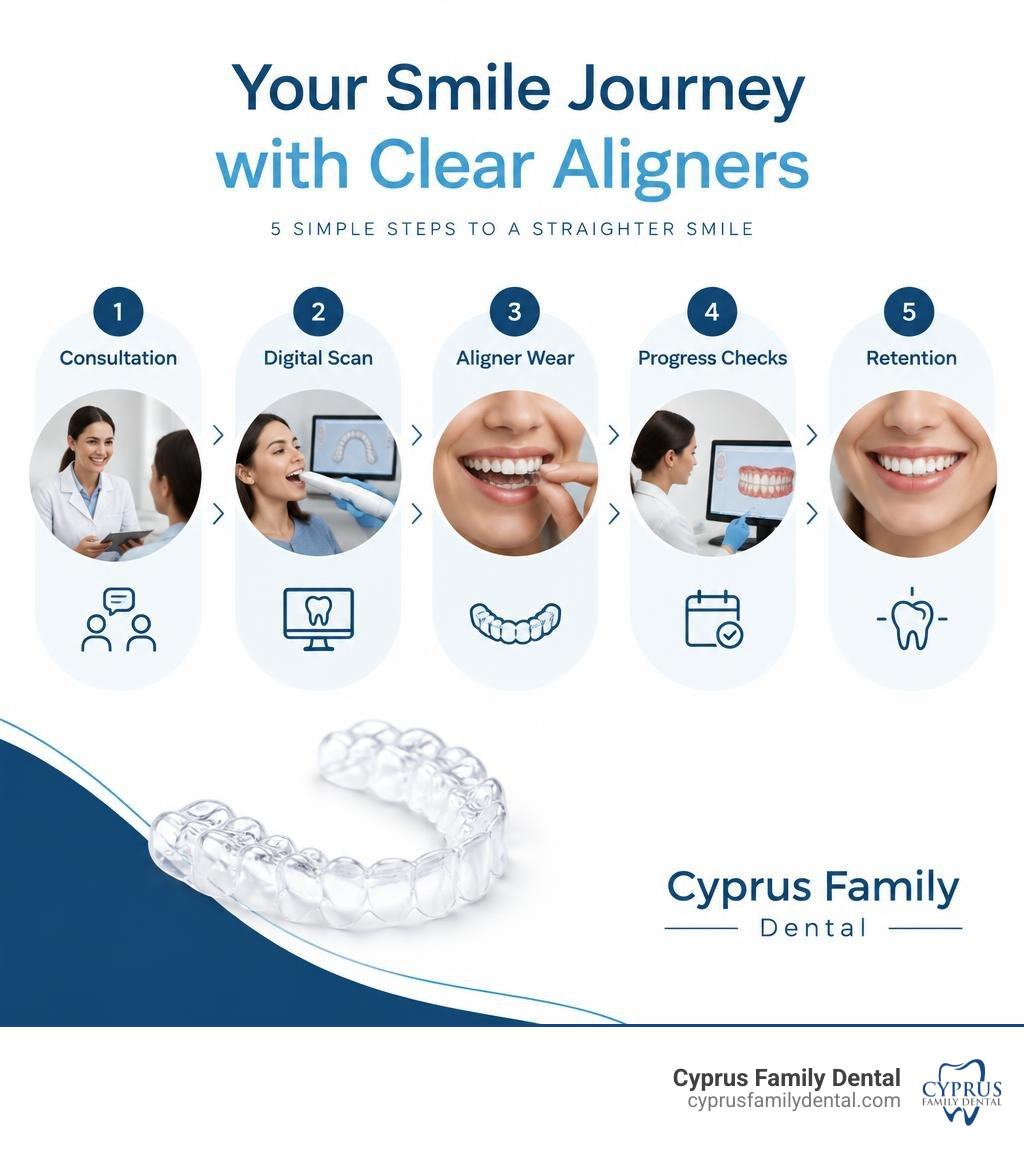
How Invisalign Clear Aligners Work
Modern orthodontics has evolved far beyond the era of stainless steel bands and conspicuous brackets. At the heart of this transformation is advanced CAD-CAM digital workflow technology and proprietary materials. Unlike off-the-shelf plastic retainers, Invisalign trays are fabricated from SmartTrack material—a multilayer medical-grade polymer engineered specifically to deliver gentle, constant forces while fitting snugly over the contours of your dental arches.
The digital workflow starts with a high-resolution 3D optical scan rather than messy, uncomfortable putty impressions. Sophisticated software models the initial position of every crown and root, allowing our team to map out a microscopic step-by-step sequence of movements. Each individual aligner is programmed to shift specific teeth fractions of a millimeter over a one- to two-week period.
Separating fact from fiction is essential when exploring modern clear aligners, which is why debunking common orthodontic myths helps clarify that aligners are sophisticated medical appliances rather than simple cosmetic covers.
| Feature | Invisalign Clear Aligners | Traditional Fixed Braces |
|---|---|---|
| Visibility | Virtually invisible, clear SmartTrack material | Visible metal or ceramic brackets and wires |
| Removability | Removable for eating, drinking, and oral hygiene | Fixed permanently until removed by a dentist |
| Dietary Restrictions | None (trays are removed during meals) | Avoid sticky, hard, or crunchy foods |
| Hygiene Routine | Normal brushing and flossing without special tools | Requires floss threaders, interdental brushes |
| Digital Planning | 3D visual simulation from start to finish | Adjustments made incrementally wire-by-wire |
| Office Visits | Progress checks every 6 to 10 weeks | Adjustment appointments every 4 to 6 weeks |
The Biomechanics of Invisalign Clear Aligners
Moving teeth through alveolar bone requires a controlled biological response. Teeth respond to pressure by remodeling bone—resorbing bone ahead of the movement path and depositing new bone behind it. Traditional aligners relied purely on displacement-driven mechanics, essentially pushing against crowns. However, modern Invisalign systems utilize a force-driven approach.
To execute complex movements such as root torque, bodily translation, and premolar de-rotation, tiny tooth-colored composite shapes called SmartForce attachments are bonded directly to specific teeth. These act as tiny handles, allowing the aligner plastic to exert precise directional vectors. Additionally, features called power ridges are built into the aligner walls to apply targeted pressure to the root zones of upper and lower incisors. Understanding these biomechanical innovations reveals the comprehensive benefits of modern aligners for achieving predictable aesthetic and functional outcomes.
Treatment Time and Efficiency with Invisalign
Chair time and overall duration are two of the biggest factors patients weigh when choosing orthodontic therapy. Because digital treatment planning maps the exact tooth trajectory beforehand, aligner therapy eliminates much of the guesswork associated with manual wire bending.
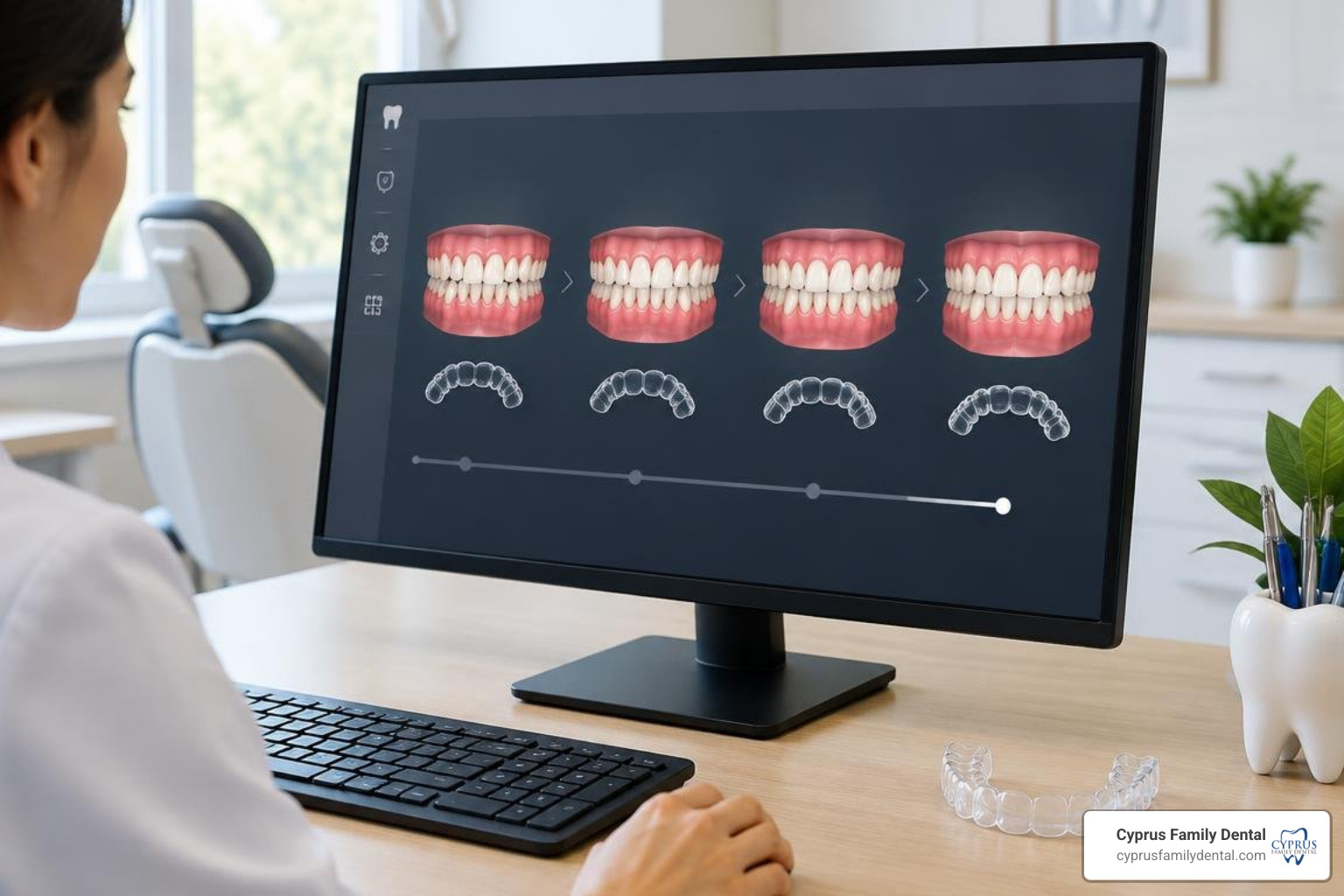
Clinical research shows that in non-extraction cases, clear aligner therapy can reduce total active treatment duration significantly compared to conventional fixed appliances. With fewer emergencies like broken brackets or poking archwires, office visits are shorter and spaced further apart. However, in premolar extraction cases requiring extensive space closure, aligners may take longer than fixed appliances to achieve full bodily root movement.
Clinical Efficacy, Oral Health, and Safety Considerations
A healthy smile is not just about straight alignment; it also requires sound supporting bone and healthy gum tissue. Clear aligners present substantial advantages for daily oral hygiene compared to fixed brackets, which naturally trap food debris and plaque. With aligners, patients brush and floss normally, keeping plaque index scores lower and reducing the occurrence of enamel demineralization (white-spot lesions).
When planning an overall smile makeover, many patients find that integrating aligners with cosmetic dentistry provides an ideal, minimally invasive starting point before completing restorations such as composite bonding or porcelain veneers. Scientific literature reviews, such as those cataloged in (İ et al., 2019), highlight both the evolving clinical precision and the biological benefits of clear aligner materials in modern clinical practice.
What Predictable Movements Can Invisalign Clear Aligners Achieve?
Scientific tracking studies reveal that clear aligners excel at certain dental movements while requiring strategic auxiliary support for others:
- Lingual Constriction: Highly predictable, achieving strong accuracy rates when moving teeth inward.
- Tipping Movements: Straightforward to accomplish as crowns move easily within the flexible plastic boundary.
- Rotation Correction: Round teeth (such as canines and premolars) can slip within smooth plastic; optimized SmartForce attachments are necessary to increase rotational accuracy.
- Extrusion: Pulling a tooth vertically out of the bone socket is biomechanically challenging for plastic alone and often requires specialized attachments or temporary elastics.
Understanding these biomechanical nuances ensures that our clinical team customizes your digital treatment plan to tackle stubborn movements early in the sequence.
Periodontal Health and Root Resorption Risks
Orthodontic tooth movement places mechanical forces on the periodontal ligament and the tip of the tooth root (the apex). Apical root resorption—a minor shortening of the root apex—is a known biological response in orthodontic care.
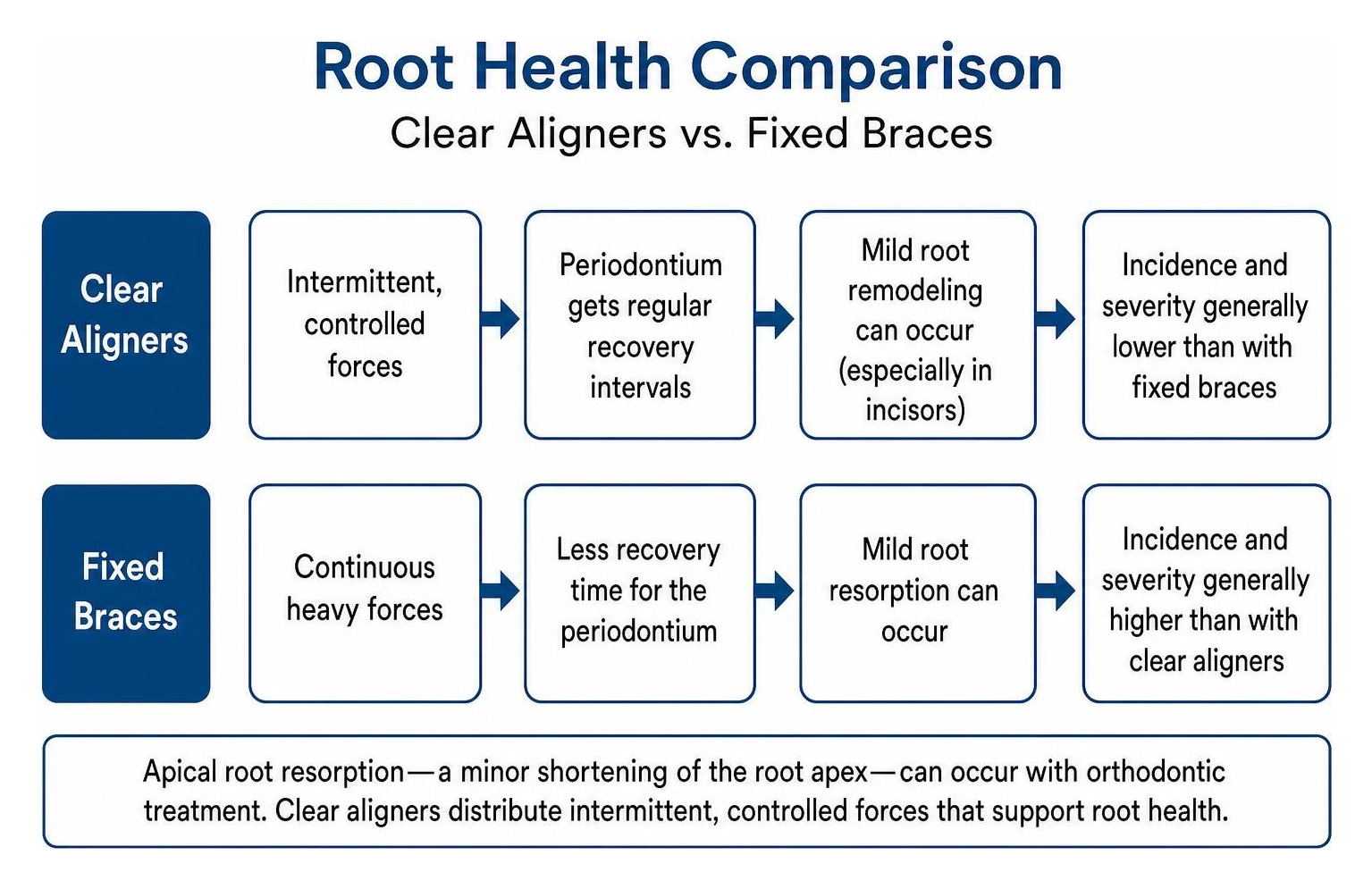
Clinical data shows that while mild root remodeling can occur during clear aligner therapy, especially in upper and lower incisors, the incidence and severity are generally lower than those observed with continuous heavy forces from fixed metal appliances. Clear aligners distribute intermittent, controlled forces that give the periodontium regular recovery intervals. Maintaining a strong foundational understanding of general vs cosmetic oral care helps patients understand how periodontal wellness and aesthetic smile goals work hand-in-hand.
The Cost of Treatment and Factors That Influence Pricing
Every smile is anatomically unique, which means the financial investment for clear aligners reflects the individual scope of care. Exploring our patient information guide for aligners gives an in-depth view of what to expect during each phase of therapy.
National Cost Averages and Case Complexity
The cost of clear aligner treatment varies based on several clinical and logistical factors:
- Mild Corrections (Express/Lite): Ideal for minor spacing, mild crowding, or minor orthodontic relapse after previous teenage braces. These require fewer aligner trays and shorter clinical oversight.
- Moderate Cases: The standard treatment category for adults and teens addressing moderate arch crowding, crossbites, or overbites.
- Comprehensive/Complex Cases: Involve extensive bite realignment, significant arch expansion, extraction management, or multidisciplinary restorative coordination.
Additional factors influencing overall cost include geographic region, provider training and diagnostic technology, and the number of refinement aligners required to achieve the final planned result.
Insurance, HSA/FSA, and Financing Strategies
Orthodontic treatment is widely recognized as an investment in preventative oral wellness. Many dental insurance plans offer an orthodontic benefit that applies to clear aligners in the same manner as traditional braces, covering a percentage or fixed lifetime maximum.
Furthermore, clear aligners qualify as an eligible medical expense under Health Savings Accounts (HSA) and Flexible Spending Accounts (FSA), allowing you to pay using pre-tax dollars. Flexible monthly financing options and in-house installment plans can also help divide your overall investment into comfortable monthly installments.
The Step-by-Step Treatment Journey from Scan to Smile Retention
Embarking on clear aligner treatment is a collaborative, transparent journey divided into distinct phases designed to maintain comfort and progress.
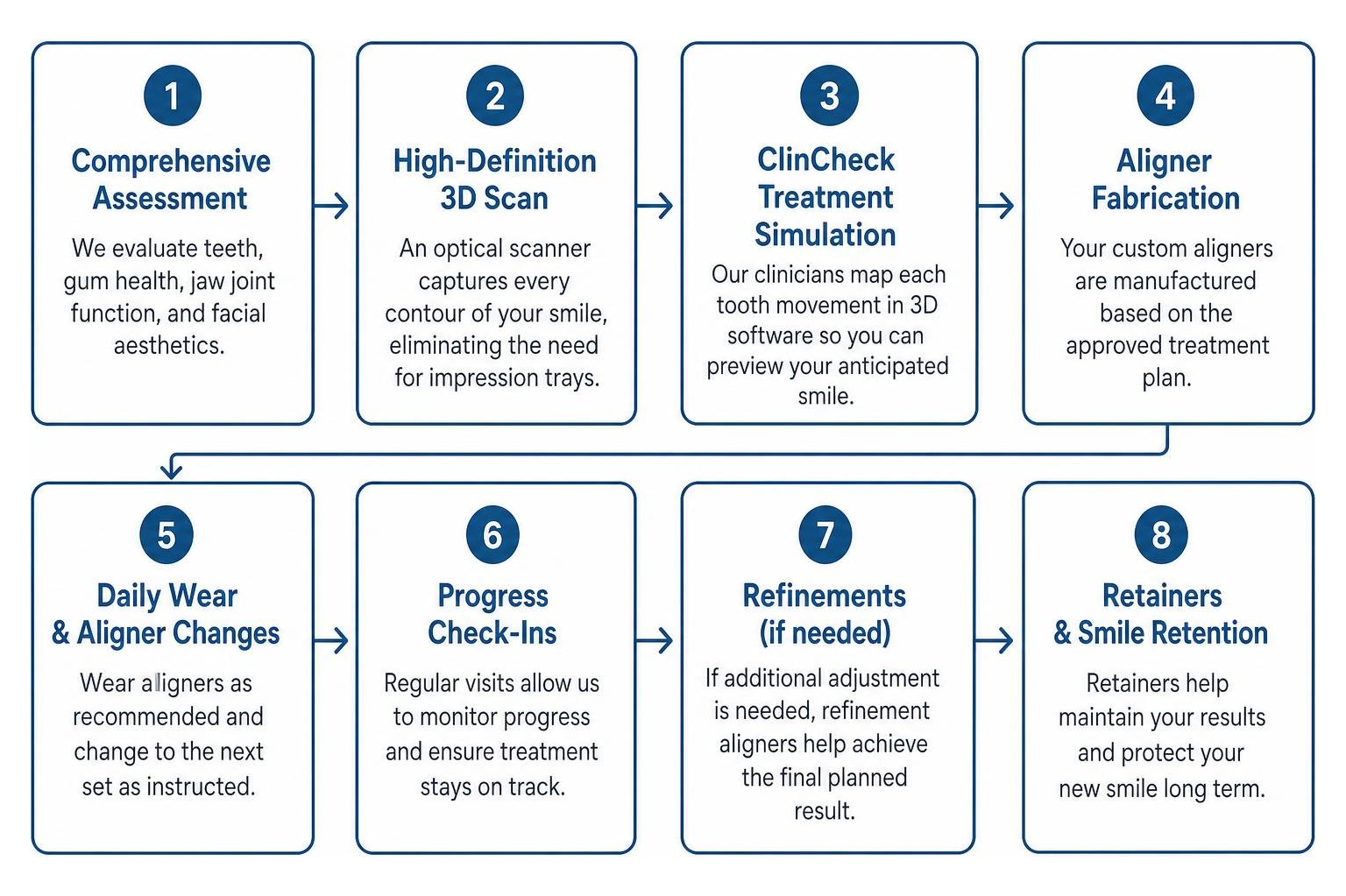
Digital Scanning, ClinCheck Planning, and Daily Wear
- Comprehensive Assessment: We evaluate teeth, gum health, jaw joint function, and facial aesthetics.
- High-Definition 3D Scan: An optical scanner captures every contour of your smile, eliminating the need for impression trays.
- ClinCheck Treatment Simulation: Our clinicians map each tooth movement in 3D software so you can preview your anticipated smile before the aligners are manufactured.
- Aligner Delivery and Attachment Bonding: Small, tooth-matched attachments are placed, and your first series of trays is delivered with detailed handling instructions.
- Daily Wear Routine: You wear your aligners for 20 to 22 hours per day, removing them solely to eat, drink non-water beverages, brush, and floss. Many patients choose starting aligner treatment in summer to adapt to the daily aligner routine during a more flexible schedule.
- Progress Checks: In-office checks occur every 6 to 10 weeks to monitor tracking, issue subsequent sets of trays, and verify gum health.
Post-Treatment Stability and Long-Term Retention
Once active alignment is complete, the retention phase begins. Bone tissue around newly repositioned roots requires months to consolidate and mature. Without retainers, natural physiological forces and aging can lead to orthodontic relapse.
Custom Vivera retainers—crafted from durable, clear material—are worn full-time for a brief stabilization window, followed by nightly wear. Retainers protect your alignment investment, keeping your bite balanced and your smile straight for years to come.
Frequently Asked Questions About Clear Aligners
How long does typical treatment take for adults?
For the average adult, treatment ranges from 6 to 18 months, depending on the degree of crowding or bite misalignment. Minor relapse cases can often be completed in as little as 3 to 6 months. Your compliance with wearing the aligners 20 to 22 hours each day is the single most important factor determining whether treatment stays on schedule.
Can aligners fix severe bite misalignments and extractions?
Yes. Thanks to SmartForce attachments, power ridges, and specialized elastics, clear aligners can successfully correct many complex malocclusions, deep overbites, open bites, and select extraction spaces. In very severe skeletal discrepancies, our team may recommend a hybrid approach or collaborate with specialist care to achieve the best functional outcome.
Do I need to wear a retainer forever after treatment?
Yes, lifelong nighttime retention is standard orthodontic protocol regardless of whether you used clear aligners or metal braces. Teeth naturally experience microscopic shifts over time due to chewing forces and the normal aging process. Wearing a clear retainer while sleeping ensures your teeth remain firmly in their ideal positions.
Conclusion
A straight, healthy smile enhances daily oral hygiene, balances chewing forces, and builds lifelong personal confidence. At Cyprus Family Dental, we are dedicated to providing gentle, modern dental solutions tailored to you and your family. If you are ready to explore how clear aligners can transform your oral health, schedule an Invisalign consultation in Magna with our caring team today.
References
Tamer İ, Öztaş E, Marşan G. “Orthodontic Treatment with Clear Aligners and The Scientific Reality Behind Their Marketing: A Literature Review..” Turkish journal of orthodontics, 2019. PMCID PMC7018497.