

How Custom Veneers Smile Design Works
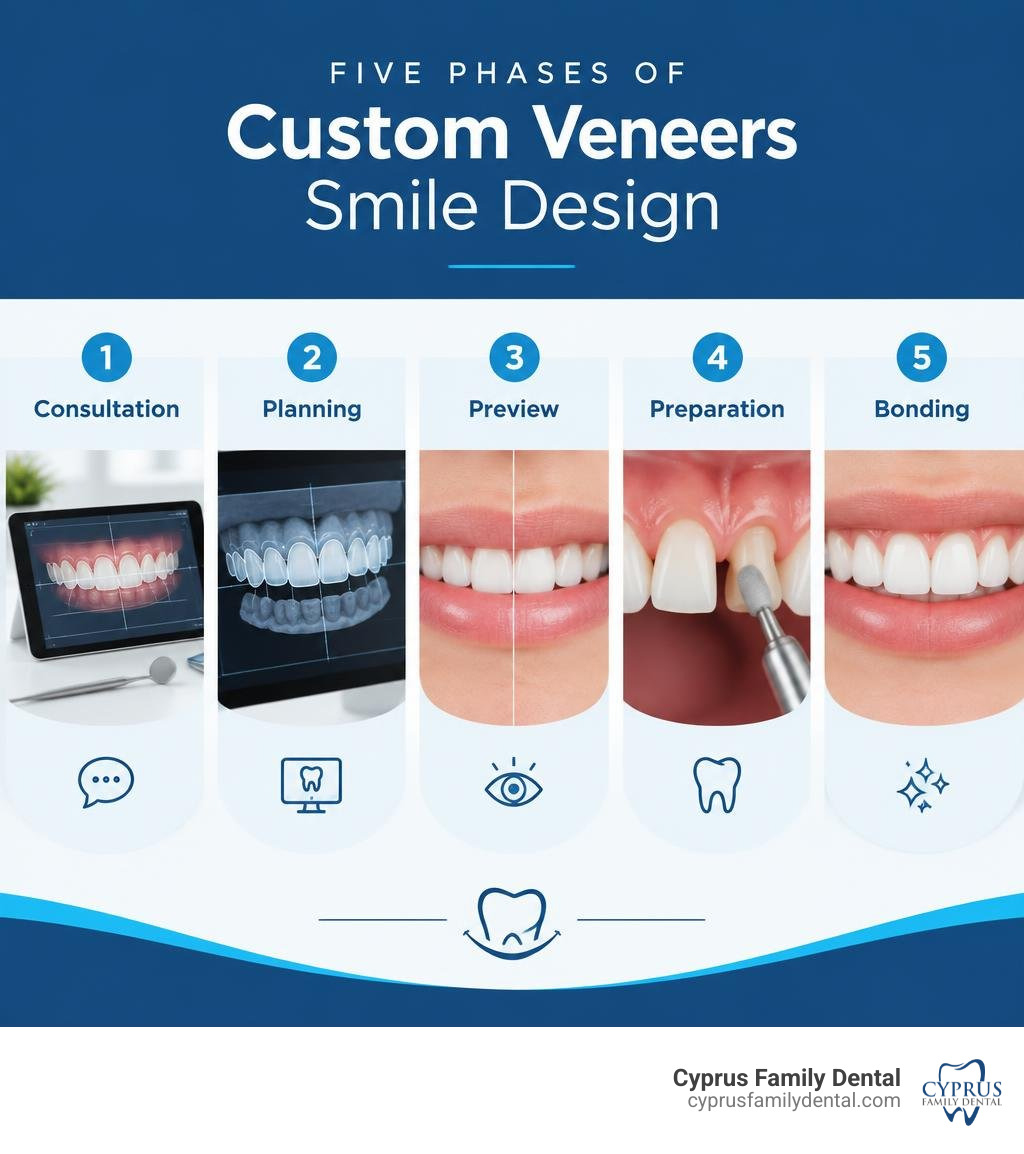
Smile design with veneers plans the shape, shade, and size of veneers around your teeth, lips, gums, and face. A dentist first checks your oral health and bite. Digital smile design can then help you preview a proposed look and give feedback before treatment begins. The preview is a planning tool, not a promise of the final result.
At Cyprus Family Dental, the goal is a smile that looks natural and fits your needs. This guide explains what to ask about the design, treatment, and long-term care before you decide.
The Fundamentals of Custom Veneers Smile Design
A balanced, attractive smile is never an accident. It is the result of architectural planning, artistic vision, and precise dental engineering. In modern cosmetic dentistry, smile design treats your mouth as an integrated element of your overall facial structure. Instead of simply placing uniform white shells over your existing teeth, we look closely at tooth contours, incisal edge positioning, gingival display, and facial symmetry. Research published in the Journal of Prosthetic Dentistry highlights that systematic facial and dental analysis improves the predictability of aesthetic outcomes in porcelain veneer cases.
The core philosophy of custom veneers smile design is harmony. When teeth are designed in isolation without considering the surrounding tissues, the result often looks bulky, unnatural, or overly opaque—what many describe as the dreaded “chiclet teeth.” True custom design blends artistic craftsmanship with biological parameters. We ensure that the incisal edges (the biting edges of your front teeth) gently follow the curvature of your lower lip when you smile, that the contact points between teeth appear natural, and that your bite remains fully functional and comfortable.
How Facial Analysis Guides Veneers Smile Design
Every face possesses unique lines, angles, and dynamics. When designing dental veneers, facial analysis is our primary blueprint:
- Face Shape Harmony: The geometry of your face heavily informs tooth morphology. Individuals with angular or square jawlines often benefit from slightly stronger, more defined line angles on their central incisors to match their facial presence. Conversely, rounder or heart-shaped faces often achieve natural balance with softer, subtly curved embrasures or slightly elongated centrals that add vertical balance to the face.
- The Lip Line and Incisal Curve: When you deliver a full, relaxed smile, your upper teeth should create a gentle, upward-curving arc that parallels the border of your lower lip. An inverted curve or a completely flat horizontal line creates an aged appearance.
- Buccal Corridors: These are the dark spaces visible between the corners of your mouth and the outer surfaces of your upper back teeth when you smile. Designing veneers with proper arch width helps fill empty buccal corridors appropriately, creating a broad, radiant smile without looking overfilled.
- Facial Midline Alignment: We assess the true facial midline (drawing a vertical reference line between the pupils and down through the nose and philtrum) to ensure the central incisors sit in natural aesthetic balance with your overall facial features.
The Role of Digital Smile Design (DSD) and 3D Mock-Ups
Gone are the days when patients had to cross their fingers and hope their permanent veneers turned out right. Modern dentistry utilizes digital workflows that bring total predictability to cosmetic makeovers.
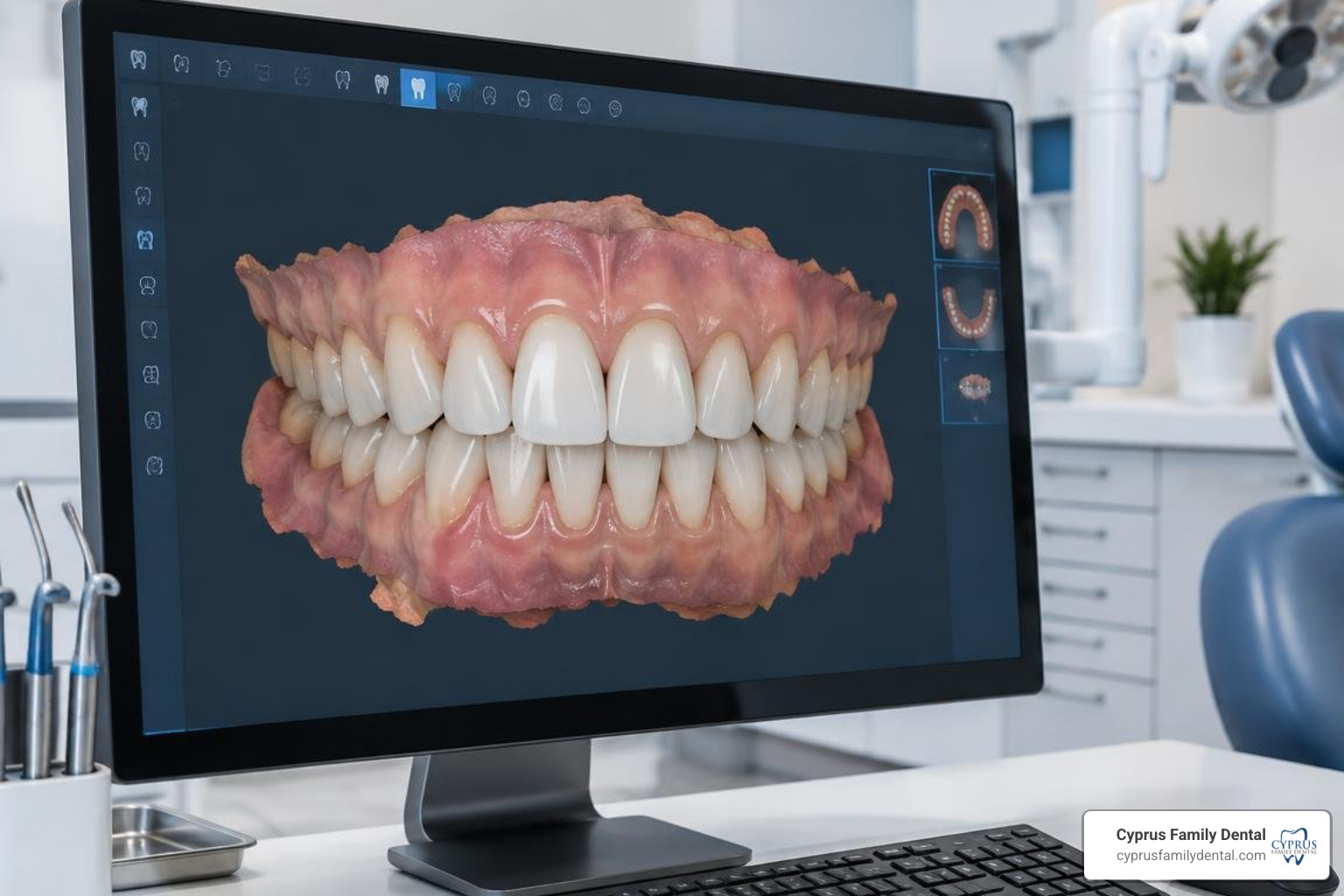
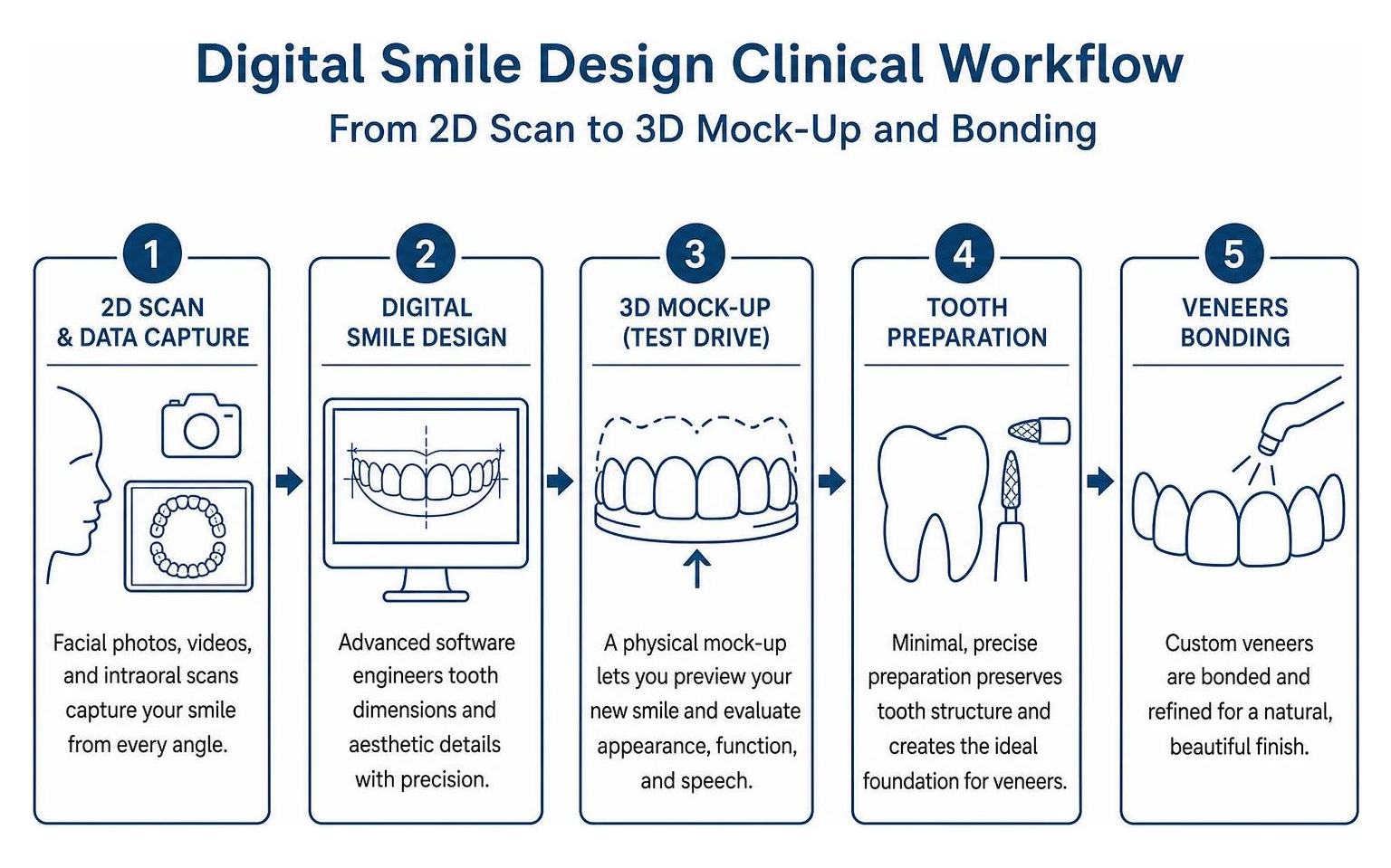
Using high-resolution facial photography, dynamic video analysis, and advanced intraoral optical scanners, we capture every angle of your dentition and facial expressions. This data feeds into specialized software where we engineer tooth dimensions down to fractions of a millimeter. Clinical research on porcelain laminate veneer planning and digital workflows demonstrates that combining digital simulations with physical mock-ups dramatically enhances precision, reduces clinical adjustments, and improves patient satisfaction.
Once the digital blueprint is complete, we transfer the design into a physical 3D mock-up or provisional resin shell. You can actually “test-drive” your proposed smile directly in your mouth. This trial phase allows us to evaluate not only how the teeth look when you speak, smile, and laugh, but also how your lips move and how your speech sounds (phonetics) before any permanent alterations are made.
Porcelain vs. Composite: Comparing Materials for Your Smile Makeover
Choosing the right restorative material is an essential step in planning your smile transformation. While both porcelain and composite resin achieve stunning cosmetic enhancements, they possess distinct physical properties, clinical indications, and manufacturing processes. For a deeper breakdown of fundamental veneer concepts, check out our educational guide on veneers.
Aesthetics, Durability, and Longevity Metrics
When comparing materials, dental ceramics such as lithium disilicate (often known as E.max) and feldspathic porcelain remain the premier standard for natural optical realism and long-term durability.
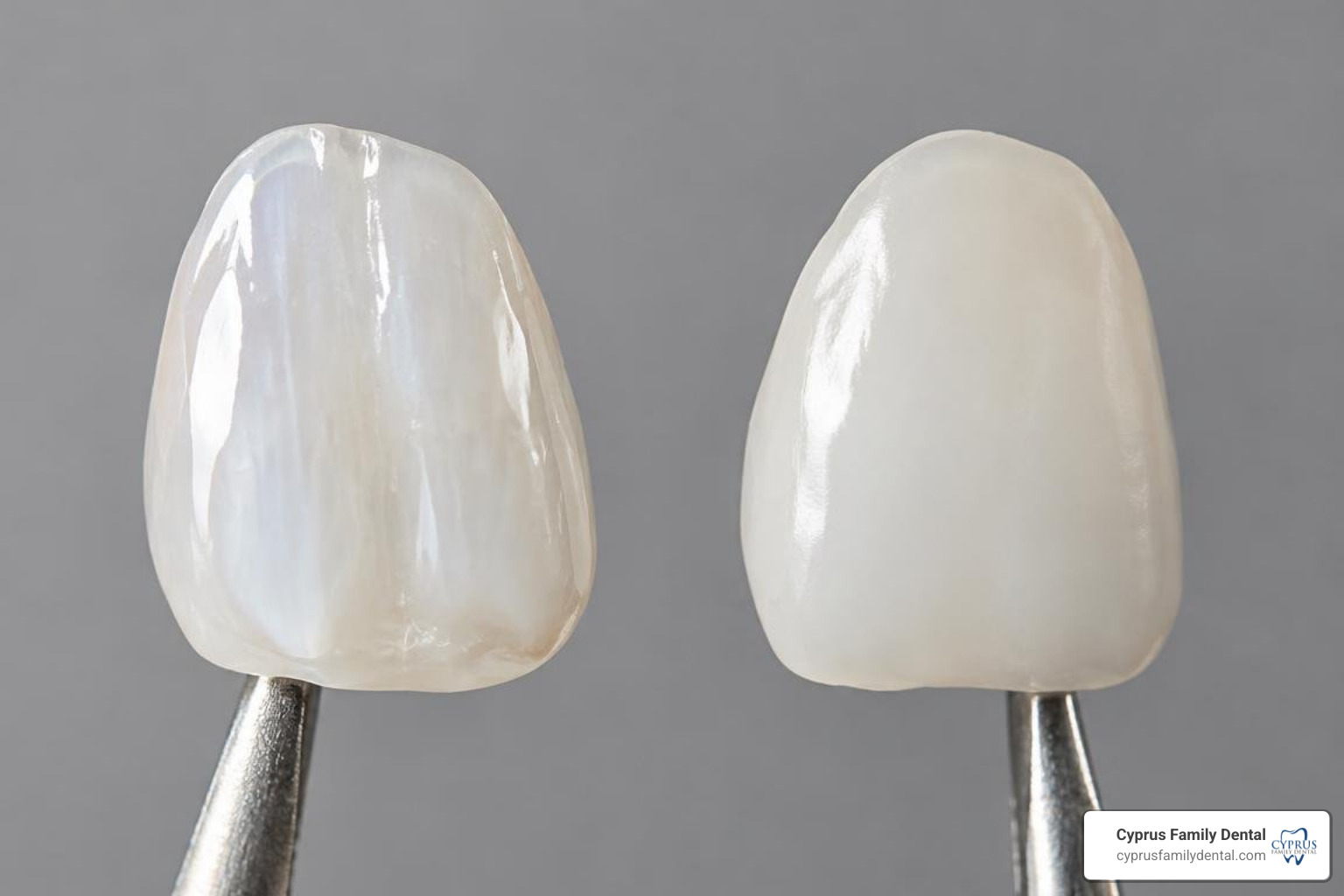
- Optical Translucency and Shade Depth: Natural tooth enamel is not a solid, flat white; it is semi-translucent, allowing light to penetrate and reflect off the underlying dentin. High-grade ceramics replicate this depth, natural fluorescence, and micro-texture. Composite resin, while versatile and aesthetic, is more monochromatic and can lose its initial luster over time.
- Stain Resistance: Porcelain is non-porous and glass-like, making it completely impervious to stains from coffee, red wine, tea, and dark berries. Composite resin consists of microscopic organic filler particles bound in a resin matrix, which can absorb pigments and surface stains over years of exposure.
- Fracture Toughness and Longevity: Clinical data consistently highlights the exceptional longevity of ceramic restorations. Systematic reviews in the Journal of Prosthetic Dentistry have documented 10-year survival rates exceeding 90% for porcelain laminate veneers, with many lasting 15 to 20 years when supported by proper oral hygiene and regular dental care. Direct composite veneers offer a typical lifespan of 5 to 7 years before requiring polishing, surface repair, or replacement.
Cost Factors and Long-Term Value Comparison
The upfront and long-term financial investment differs noticeably between ceramic and direct resin options. Porcelain restorations require multiple appointments, high-precision digital lab milling or custom layering by a master ceramist, and specialized adhesive cementation protocols. Composite veneers are hand-sculpted directly onto the tooth structure in a single appointment, reducing initial laboratory expenses.
| Feature / Metric | Custom Porcelain Veneers (E.max / Ceramic) | Direct Composite Resin Veneers |
|---|---|---|
| Primary Material | Lithium Disilicate / Feldspathic Porcelain | Micro-Hybrid / Nanofill Composite Resin |
| Average Lifespan | 10–20+ Years with proper maintenance | 5–7 Years before refresh/replacement |
| Stain Resistance | Exceptional (Glass-smooth surface impervious to pigments) | Moderate (Requires periodic polishing to resist surface dulling) |
| Fabrication Method | Precision digital milling & master ceramist hand-layering | Direct, hand-sculpted chairside placement |
| Number of Visits | Typically 2–3 visits over 1–3 weeks | Usually completed in a single appointment |
| Reversibility | Irreversible (Conservative enamel preparation required) | Often additive (May require minimal to no enamel prep) |
| Long-Term Value | High durability; minimal maintenance beyond routine checkups | Lower initial cost; higher long-term maintenance needs |
The Step-by-Step Procedure for Smile Design with Veneers
Achieving a seamless, comfortable smile transformation involves a structured clinical sequence. For an in-depth look at this restorative journey, explore our guide on the process behind dental veneers explained.
Candidacy Evaluation and Conservative Preparation
Your journey begins with a comprehensive oral health examination. Veneers are a cosmetic restoration, which means the underlying foundation—your gums, bone levels, and natural tooth structure—must be healthy and free of untreated decay or active periodontal disease.
If you are exploring the cosmetic dentistry options in Magna, UT, our practice focuses heavily on conservative preparation. Modern ceramic materials allow us to craft micro-thin shells (ranging between 0.3 mm and 0.7 mm in thickness). We remove only a minimal layer of outer enamel—often no thicker than a contact lens—under local anesthesia. Preserving enamel is critical because dental adhesives create an exceptionally strong, permanent bond with enamel compared to deeper dentin layers.
After preparation, we capture final digital impressions and place custom temporary veneers that reflect your approved smile design mock-up. These protect your teeth and allow you to live with your new tooth shapes for several days while the dental laboratory crafts your final restorations.
Fabrication, Try-In Verification, and Final Bonding
During the laboratory phase, a master ceramist handcrafts each porcelain shell, customizing the translucency, incisal halos, and shade gradient to match your treatment goals.
When you return for your bonding appointment:
- Try-In Verification: We gently remove the temporary veneers and clean the underlying teeth. Each permanent veneer is seated using water-soluble try-in pastes to verify fit, margins, bite dynamics, and color harmony against your natural teeth and skin tone.
- Surface Conditioning: Once approved, the inner surface of the ceramic is etched with a specialized acid and treated with a silane coupling agent to maximize microscopic adhesion. The natural tooth enamel is cleaned, isolated, and lightly etched.
- Adhesive Bonding: A high-strength, light-cured resin cement is applied. We seat each veneer with gentle, uniform pressure and use a high-intensity curing light to polymerize the bonding resin, fusing the ceramic directly to your natural tooth.
- Finishing and Occlusal Polish: We carefully remove any excess cement along the gum line, polish all margins, and meticulously check your bite with articulating paper to eliminate premature contacts. You leave with your completed, fully functional custom dental veneers.
Weighing the Investment: Benefits, Longevity, and Maintenance
A comprehensive smile makeover is an investment in both your oral aesthetics and everyday self-confidence. Caring for your restorations ensures they remain radiant and structurally sound for decades to come.
Preserving Veneer Restorations and Preventing Complications
While porcelain veneers cannot develop cavities, the natural tooth structure underneath them and the surrounding gum tissue still require diligent care:
- Non-Abrasive Oral Hygiene: Brush twice daily using a soft-bristled toothbrush and a non-abrasive fluoride toothpaste. Highly abrasive pastes can create microscopic scratches on dental restorations or polish away protective glaze layers over time.
- Nightguard Use for Bruxism: If you clench or grind your teeth during sleep (bruxism), excessive lateral forces can cause micro-fractures, chipping, or debonding. A custom-fitted nightguard provides an essential protective cushion against nocturnal forces.
- Mindful Eating Habits: High-strength ceramics can easily withstand normal chewing, from crisp apples to vegetables. However, never use your teeth as tools to open plastic packaging, rip tape, bite fingernails, or chew on ice and hard candy.
- Routine Professional Cleanings: Visit us every six months for routine hygiene visits. Our team uses specialized polishing pastes safe for cosmetic restorations to protect marginal integrity and maintain gum health.
Evaluating When Veneers Are Worth the Investment
Deciding whether custom veneers are the right choice comes down to your personal aesthetic goals, baseline oral health, and budget fit:
- Comprehensive Transformation: If you face multiple cosmetic issues simultaneously—such as deep intrinsic tetracycline staining that resists standard whitening, chipped incisal edges, worn enamel, and minor gaps—veneers address all these concerns in one coordinated treatment plan.
- Alignment and Aesthetic Harmony: If your main concern involves moderate to severe bite misalignment or severe crowding, orthodontic care can be completed first or coordinated with cosmetic veneers to achieve optimal functional stability.
- Long-Term Value: When planned properly through digital workflows, custom veneers offer an extraordinary return on confidence, eliminating self-consciousness during social gatherings, career presentations, and photographs.
Frequently Asked Questions About Veneers Smile Design
How long do porcelain veneers typically last with proper care?
Porcelain veneers crafted from high-strength ceramics like lithium disilicate generally last between 10 and 20 years. Clinical studies consistently show a 10-year survival rate above 90% when veneers are bonded to healthy enamel and maintained with daily brushing, flossing, regular dental checkups, and a protective nightguard for patients who grind their teeth.
Can dental veneers correct crooked teeth without orthodontic braces?
Veneers can correct mild misalignment, slight rotations, uneven tooth lengths, and minor spacing gaps, which is why they are sometimes called “instant orthodontics.” However, for moderate to severe crowding or major bite discrepancies (such as severe overbites or crossbites), orthodontic treatment is recommended first to move the tooth roots into optimal alignment and preserve healthy tooth enamel.
What is the average recovery time and sensitivity after veneer placement?
Recovery from veneer placement is typically swift and comfortable. Because enamel preparation is minimal and performed under local anesthesia, you should not feel discomfort during the procedure. It is common to experience mild sensitivity to hot and cold temperatures for one to two weeks following preparation and initial bonding as the tooth pulps settle. Over-the-counter pain relievers and desensitizing toothpaste quickly manage any temporary gum tenderness or temperature sensitivity.
Conclusion
Custom smile design combines advanced dental science with artistic personalization to create a smile that feels authentic to who you are. At Cyprus Family Dental, we take the time to evaluate your unique facial symmetry, oral health, and lifestyle needs, using modern digital planning to guide every step of your makeover. If you are ready to explore your cosmetic options with a compassionate, patient-centered team in Magna, UT, take the first step and discover what dental veneers can do for your smile.