

Are Dental Sealants Worth It for Magna Kids?
For many kids, yes. To protect your child’s back teeth with dental sealants in Magna, UT, schedule a checkup when their first permanent molars come in, usually between ages 6 and 9. Ask the dentist whether the grooves in those teeth would benefit from sealants.
Sealants are thin coatings that cover the chewing surfaces where food and bacteria can get stuck. They’re applied without drilling and can help prevent cavities for years. Cyprus Family Dental can check your child’s teeth and help you decide whether sealants make sense.
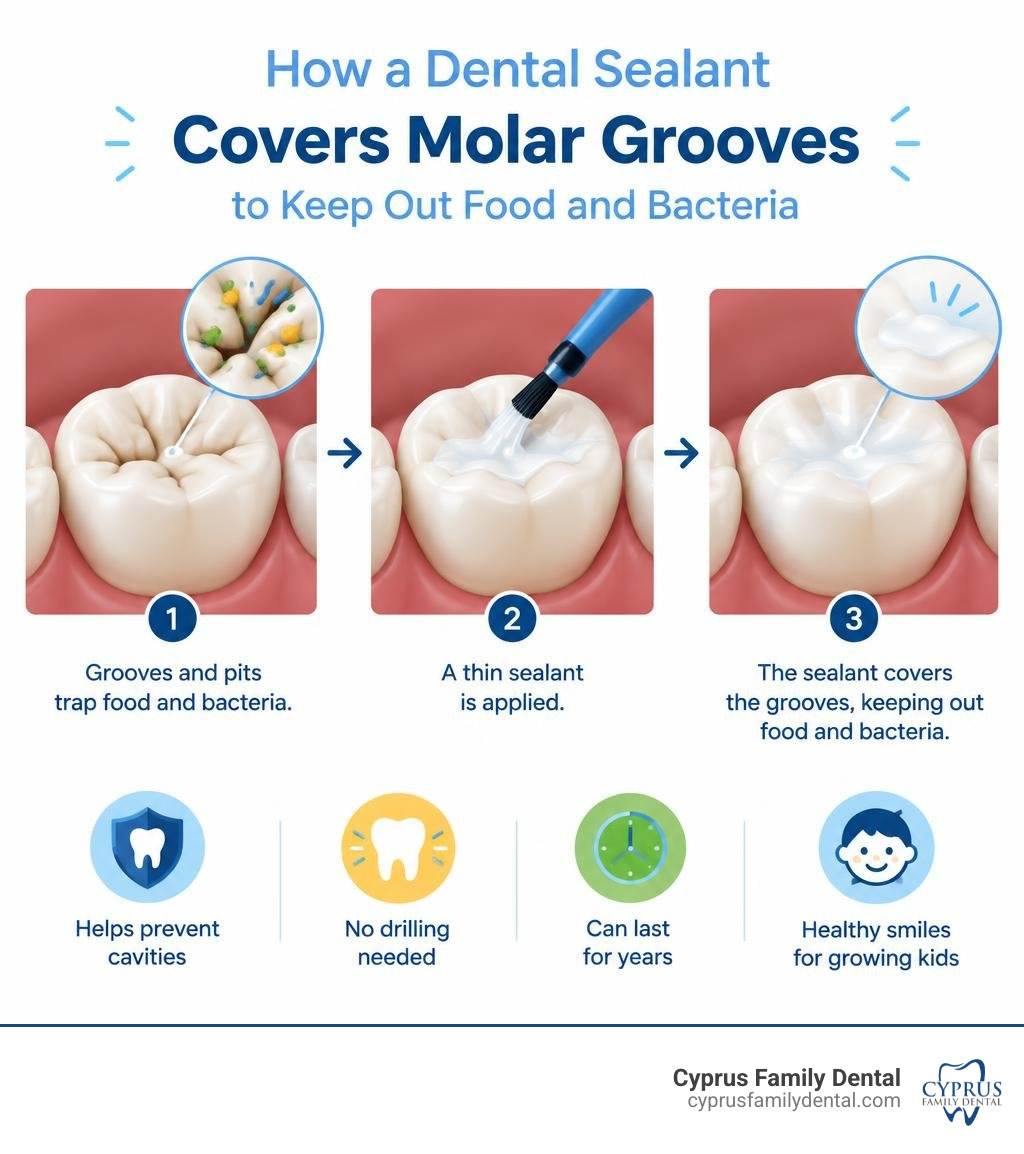
What Are Dental Sealants and How Do They Protect Young Smiles?
When you look at the back teeth—the molars and premolars—you will notice they are not flat. They are filled with tiny hills, deep valleys, and narrow pits known as fissures. While these grooves are fantastic for grinding up food, they act like natural traps for sticky snacks and plaque. Often, these microscopic crevices are so narrow that even a single bristle from a toothbrush cannot reach inside to clean them properly.
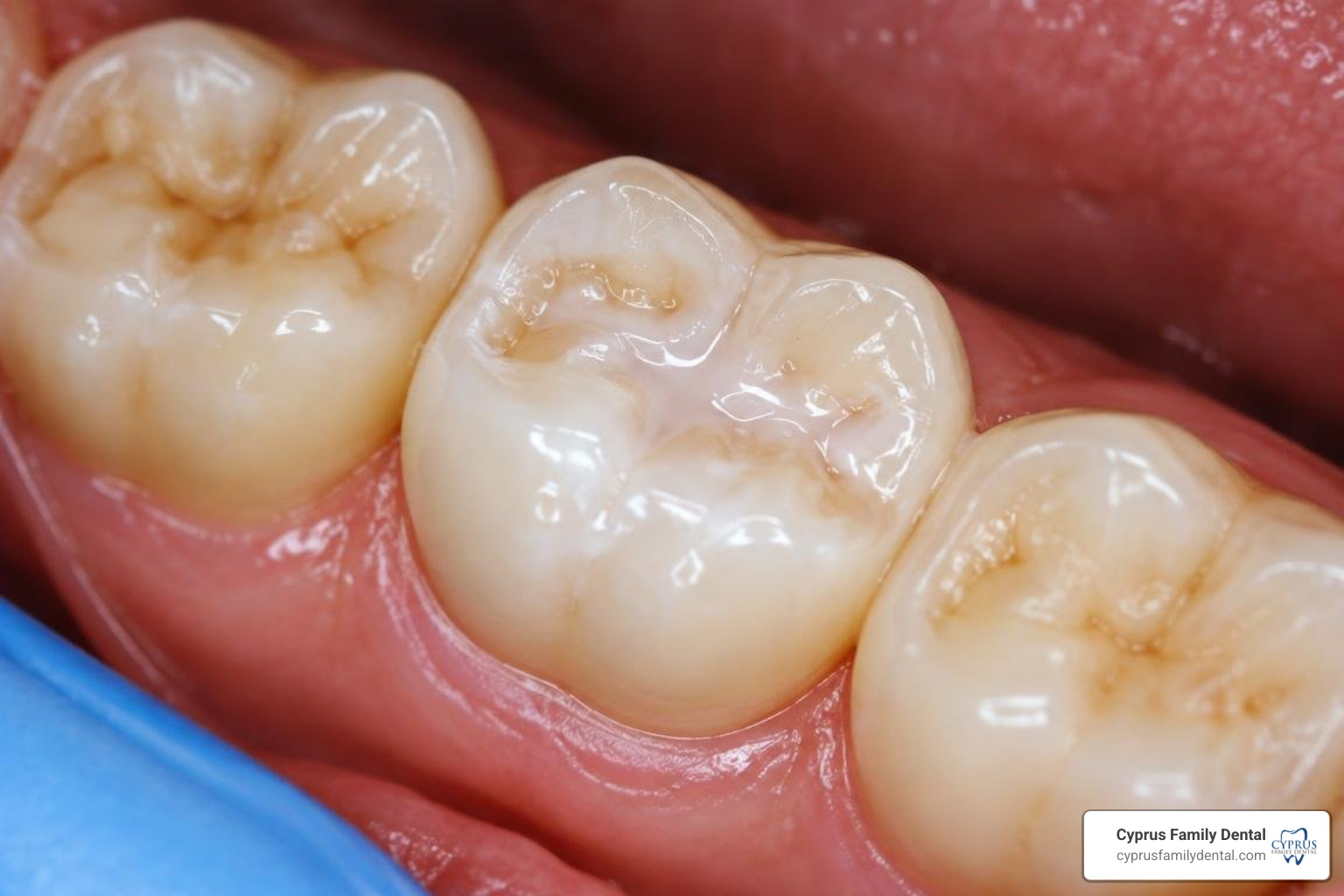
A dental sealant is a protective, tooth-colored or clear acrylic resin coating painted directly onto these chewing surfaces. Think of it like an invisible raincoat or a custom shield for your child’s teeth. By filling in the deep grooves, sealants create a smooth surface that keeps food particles, acid, and harmful bacteria from settling into the enamel. As an essential part of preventive dental care, sealants stop the decay process before it even has a chance to start.
Understanding How Tooth Sealants Work
The science behind sealants is straightforward and highly effective. Cavities form when bacteria in the mouth feed on leftover sugars from meals, producing acids that slowly wear away enamel. Since back molars do the heavy lifting during meals, they are naturally vulnerable.
Applying a liquid resin smooths over these microscopic crevices, eliminating the food traps where bacteria thrive. This barrier provides continuous defense against acid attacks and plays a vital role in cavity prevention. Because the sealant material bonds directly to the tooth’s enamel, it keeps out tiny particles that daily brushing might miss.
Why Getting Dental Sealants in Magna, UT Makes Sense for Children and Adults
While sealants are most frequently applied during childhood, they offer tremendous benefits for patients of all ages. In pediatric dentistry, protecting newly erupted permanent teeth helps children build healthy oral hygiene habits without the anxiety of treating deep cavities.
For adults, sealants remain a practical choice if you have deep, decay-free molar grooves. In some cases, applying a protective layer around existing restorations can also shield a crown from fracture or protect vulnerable tooth margins from secondary decay. Taking advantage of dental sealants in Magna, UT helps ensure your whole family enjoys strong, resilient smiles at every stage of life.
How Dental Sealants Are Applied: A Gentle Step-by-Step Guide
One common worry parents share is whether the application process will hurt or cause anxiety for their child. The great news is that getting sealants is completely non-invasive, painless, and quick. There is no drilling, no numbing shots, and no removal of natural tooth structure.
In children’s dentistry, comfort and positive experiences are top priorities. The procedure takes only a few minutes per tooth, making it easy even for energetic or nervous young patients. Guidelines from health organizations like the Centers for Disease Control and Prevention emphasize that sealants are one of the safest and most efficient preventive treatments available.
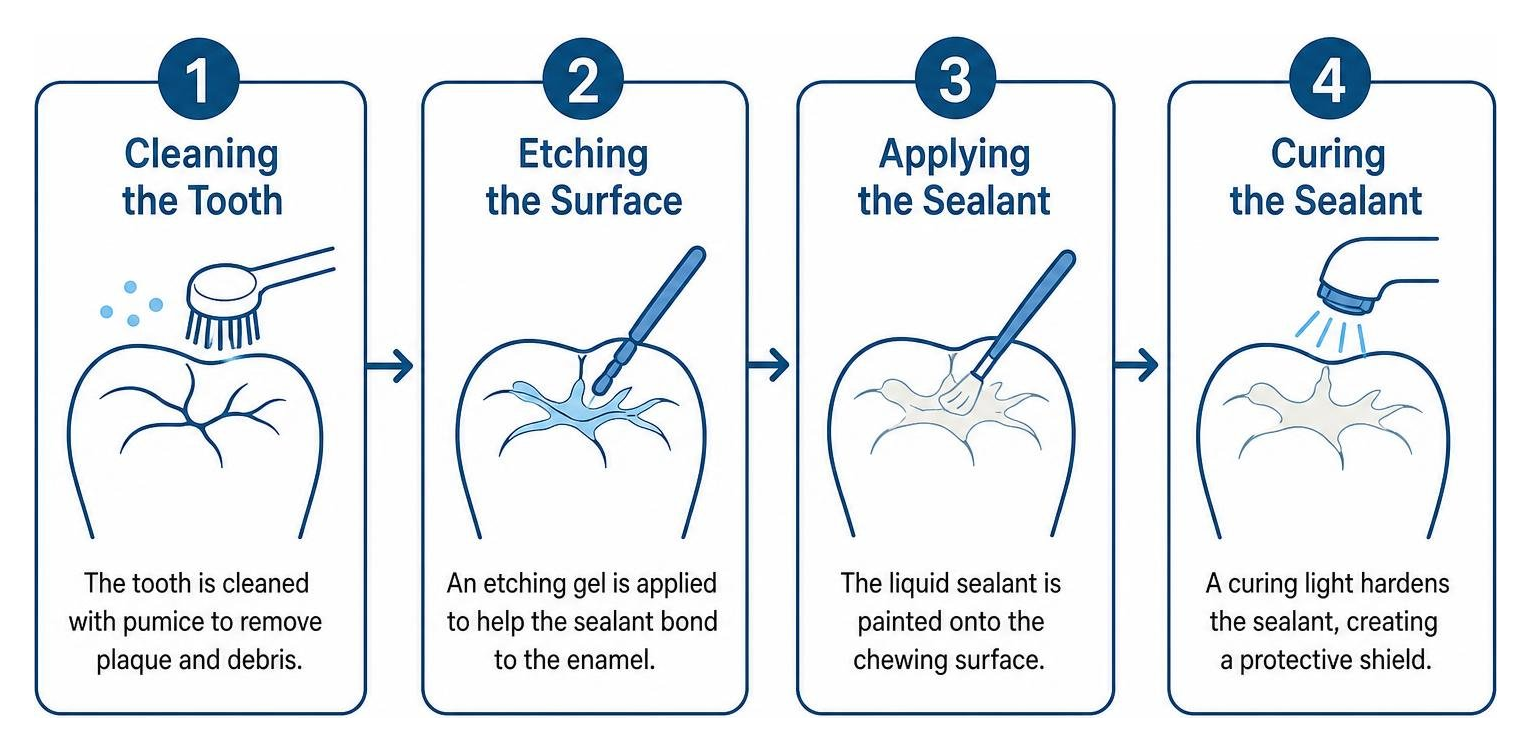
Step 1: Cleaning and Preparing the Tooth Surface
Before applying the protective coating, the tooth must be spotless. The process begins with gentle preparation:
- Pumice Polishing: We thoroughly clean the molar using a specialized dental paste to remove all food debris, plaque, and surface bacteria.
- Rinsing and Surface Drying: The tooth is rinsed clean with water and completely dried.
- Tooth Isolation: We place small absorbent cotton rolls or guards around the tooth to keep it dry and isolated from saliva, ensuring a strong bond.
Step 2: Etching, Application, and Curing
Once the tooth is clean and dry, the protective barrier is placed:
- Etching Gel: A mild, gel-like etching solution is gently applied to the chewing surface for a few seconds. This creates a microscopic, slightly textured surface that allows the resin to grip the enamel securely.
- Rinsing and Re-drying: The gel is rinsed away, and the tooth is dried again.
- Applying the Resin: We carefully paint the liquid tooth sealant directly into the deep pits and grooves of the molar.
- Light Curing: A special blue curing light is directed onto the tooth for about thirty seconds. This instantly hardens the resin into a durable shield.
- Bite Check: We quickly check your child’s bite to make sure the new coating feels smooth and comfortable when chewing.
When to Choose Dental Sealants in Magna, UT for Maximum Cavity Prevention
Timing plays a major role in getting the most protection from sealants. The most effective strategy is to seal permanent molars as soon as they erupt through the gum line, before plaque and bacteria have time to cause damage. Understanding the benefits of preventative care in family dentistry helps parents schedule visits at the right developmental milestones.
| Feature | Dental Sealants | Composite Dental Fillings |
|---|---|---|
| Primary Purpose | Prevent decay before it starts | Repair and restore decayed enamel |
| Invasiveness | Non-invasive (no drilling or shots) | Restorative (requires removing decay) |
| Application Time | A few minutes per tooth | Longer appointment time |
| Tooth Preservation | Keeps 100% of natural tooth intact | Requires removal of affected tooth structure |
| Material | Clear or tooth-colored acrylic resin | Composite resin or dental amalgam |
Eruption Timing: Ages 6 to 9 and Beyond
Children develop their permanent adult molars in two main stages:
- First Permanent Molars (6-Year Molars): These back teeth typically emerge between ages 6 and 9. Because these teeth arrive early while kids are still refining their brushing habits, protecting them right away is essential.
- Second Permanent Molars (12-Year Molars): These teeth generally appear between ages 11 and 13. Sealing them promptly provides critical protection throughout the cavity-prone teenage years.
Adults and teens who missed getting sealants early on can still benefit, as long as the chewing surfaces are healthy and free of fillings.
Preventative Sealants vs. Restorative Dental Fillings
Choosing prevention over restoration is always the best path for long-term dental health. While composite fillings are effective at restoring teeth after decay has set in, they require removing part of the natural tooth structure.
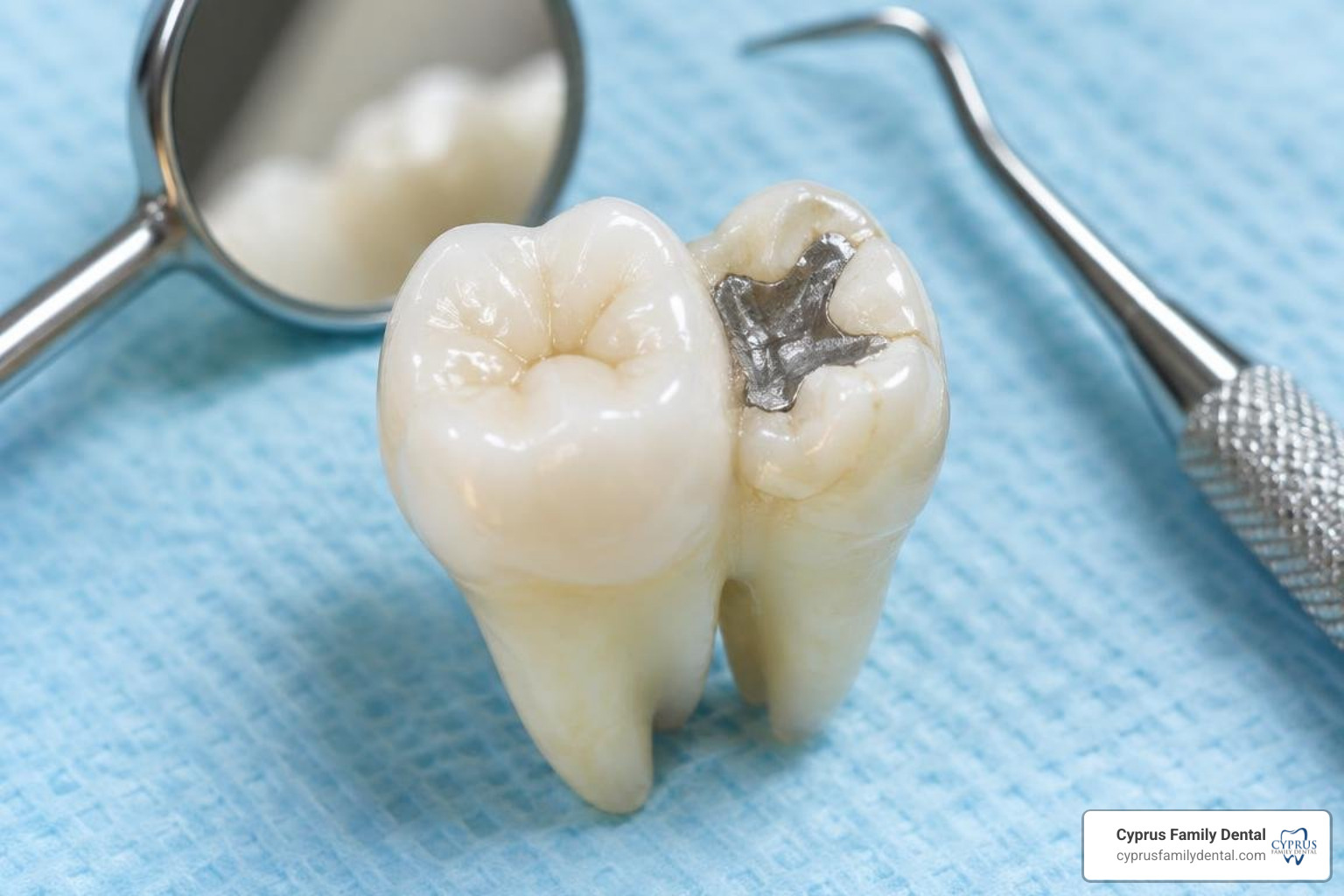
Sealants preserve all of your child’s natural enamel. By stopping cavities before they develop, you help your child avoid the discomfort of tooth decay and protect their smile in a gentle, non-destructive way.
Dental Sealant Costs and Insurance Coverage
Parents often ask about the financial side of preventive treatments. Dental sealants are widely recognized as one of the most affordable ways to protect your family’s oral health. By preventing cavities early on, sealants significantly reduce the likelihood of needing more complex and costly dental work later, such as large fillings, root canals, or crowns.
Exploring why dental sealants are a good idea reveals that most dental insurance plans view them as an essential preventive service. Many policies cover sealants at 100% or at a high percentage for children under age 14 or 16. Because insurance companies recognize that preventive dentistry saves money over time, getting coverage for your child is usually simple. Our team can help you review your specific plan details to maximize your benefits.
Frequently Asked Questions About Dental Sealants
How long do dental sealants typically last on chewing surfaces?
Dental sealants are remarkably durable and can hold up against normal chewing forces for many years. During regular checkups, we examine the sealants for any signs of chipping or wear. If a portion of the sealant wears down over time, touch-ups are quick and easy—we simply clean the area and add a small amount of new resin.
Can dental sealants be applied over existing restorations or crowns?
Sealants are primarily placed on healthy natural teeth with deep grooves, but they can also play a helpful role in general and family dentistry. In certain cases, resin can be applied along the margins of existing restorations or crowns to create a tighter seal, helping prevent secondary decay or edge fractures.
Where can I find professional dental sealants in Magna, UT?
If you are looking for gentle, family-focused care, our team right here in Magna provides comprehensive preventive treatments for all ages. We offer a welcoming, comfortable environment equipped with modern dental technology to keep visits easy and stress-free for kids and parents alike.
Conclusion
Protecting your child’s smile does not have to be complicated or stressful. Dental sealants offer a fast, gentle, and highly effective barrier against cavities during the most vulnerable growing years. By sealing out plaque and food particles, you can help your child enjoy strong teeth, positive dental visits, and a confident smile for years to come.
Take a proactive step toward lasting oral wellness. Schedule an appointment with our caring team today to find out if dental sealants are the right choice for your child!