

Dental Crowns: What They Do and What to Expect
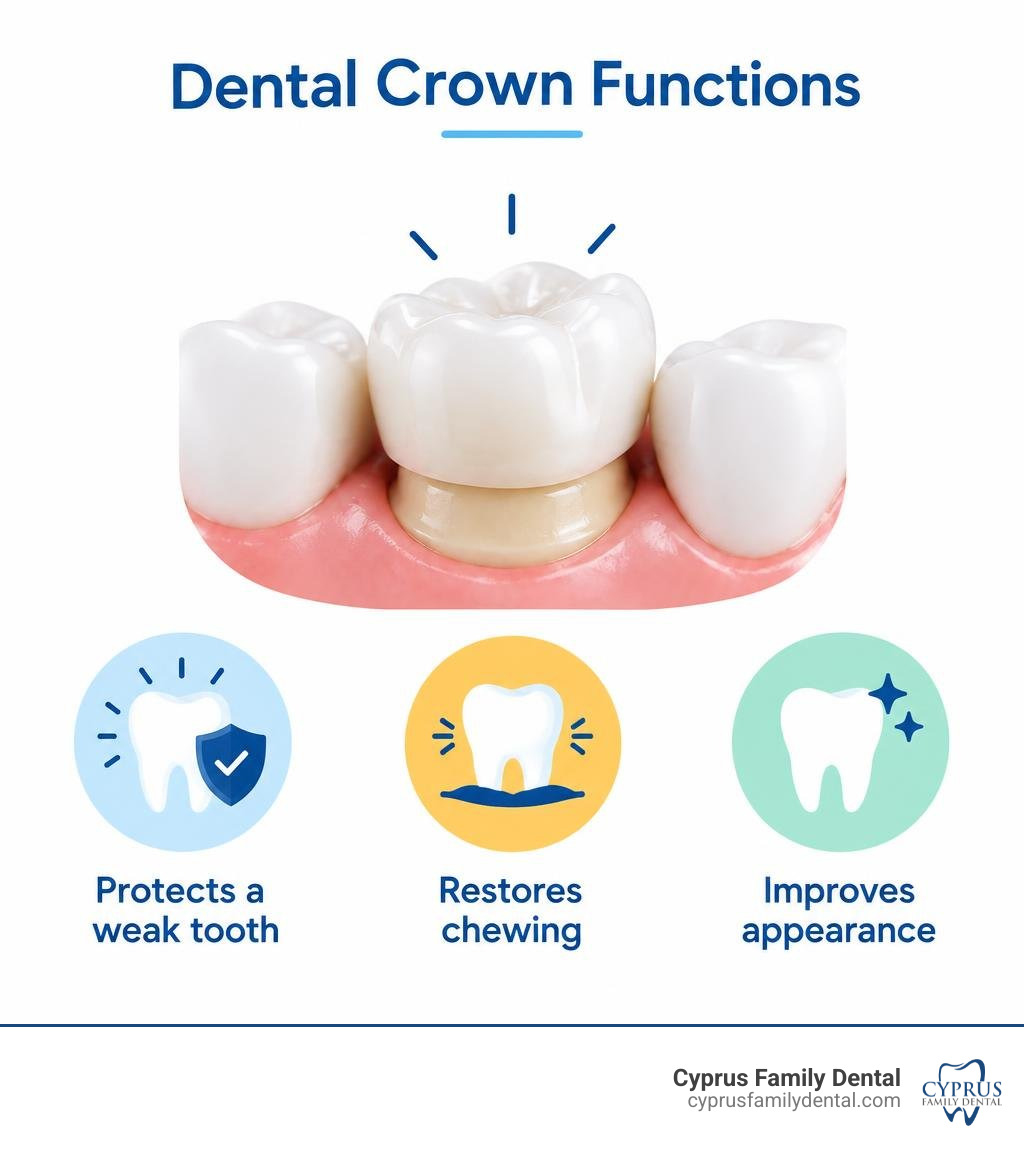
Dental Crowns are custom-made caps that cover damaged or weakened teeth. A crown can help protect a cracked tooth, restore a tooth with a large filling, or strengthen one after a root canal. It can also improve how a tooth looks and feels when you bite.
Getting a crown usually takes two visits: one to prepare the tooth and take a scan or impression, and another to fit the finished crown. The cost depends on the material, the work your tooth needs, and your dental coverage. This guide explains the choices, the procedure, and how to care for your crown.
What Are Dental Crowns and When Are They Needed?
Think of a dental crown as a custom-fitted helmet designed specifically for an individual tooth. When natural enamel becomes compromised due to deep tooth decay, extensive wear, or physical trauma, normal biting forces can cause the remaining structure to split or crumble. Placing a crown restores the tooth’s structural integrity, allowing you to chew with comfort and confidence.
There are several unmistakable signs you may need a dental crown, ranging from sharp pain when biting down on hard foods to visible hairline fractures spreading across your enamel. Crowns provide a 360-degree protective barrier that prevents existing cracks from propagating into the root structure, which could otherwise result in tooth loss.
Clinical Indications for Full-Coverage Caps
In our daily practice, we recommend full-coverage crowns when conservative restorations cannot provide long-term stability. Common clinical indications include:
- Post-Endodontic Restoration: After a tooth undergoes root canal therapy, it loses its internal blood supply and becomes brittle over time. A crown shields the remaining shell from fracturing under everyday chewing forces.
- Extensive Cavities and Failing Fillings: When tooth decay compromises more than half of a tooth’s natural width, there is simply not enough healthy enamel left to support a standard filling.
- Severe Bruxism and Enamel Wear: Chronic clenching and grinding gradually flatten cusps and wear away enamel, altering your bite alignment. Full-coverage restorations rebuild lost vertical height.
- Aesthetic Transformations: Severely discolored, misshapen, or peg-shaped teeth can be reshaped to blend seamlessly with surrounding natural teeth as part of our restorative dentistry solutions.
How Dental Crowns Compare to Fillings, Onlays, and Veneers
Patients often ask why a standard filling or cosmetic veneer is not sufficient for a damaged tooth. The key distinction lies in the amount of tooth structure being replaced, the degree of surface reduction required, and the biomechanical strength provided.
| Restoration Type | Tooth Coverage | Enamel Reduction | Primary Purpose | Average Longevity |
|---|---|---|---|---|
| Composite Filling | Localized (interior cavity) | Minimal (decay removal only) | Repair small to medium cavities | 5–7 Years |
| Porcelain Veneer | Facial (front surface only) | Light (0.3mm – 0.7mm) | Cosmetic improvement for front teeth | 10–15 Years |
| Inlay / Onlay | Partial (cusp replacement) | Moderate (preserves healthy cusps) | Restore structural stability conservatively | 10–15+ Years |
| Dental Crown | Full coverage (360 degrees) | Substantial (1.0mm – 2.0mm) | Protect severely compromised or fractured teeth | 10–15+ Years (up to 30) |
While porcelain veneers excel at enhancing the front smile and fillings address localized decay, only a crown encapsulates the entire visible portion of the tooth down to the gumline, distributing bite forces evenly across the entire root base.
Materials, Durability, and Treatment Costs
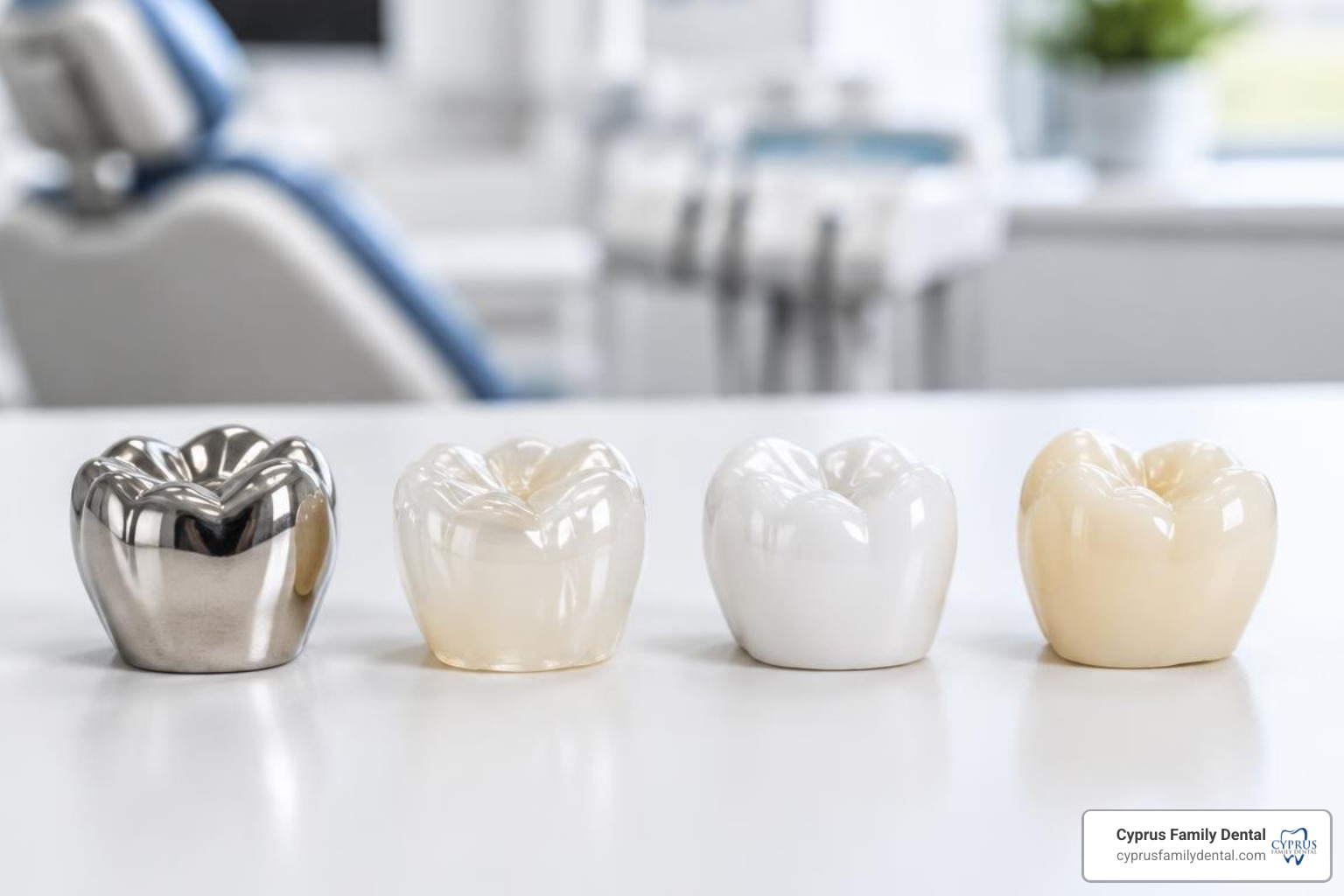
Selecting the right material involves balancing aesthetic goals, bite forces, biocompatibility, and the location of the tooth. A front incisor demands life-like translucency, whereas a heavy-chewing second molar requires maximum tensile strength. Reviewing resources like this UK Guide on Crown Types and Costs highlights how material selection dictates durability and clinical performance.
Popular Materials: Zirconia, Ceramic, Metal, and Resin Dental Crowns
- Zirconia: Monolithic zirconia is known for exceptional fracture resistance. It is strong enough to withstand heavy bite loads, making it suitable for back molars and individuals who grind their teeth. Modern translucent zirconia also delivers natural-looking aesthetics.
- All-Ceramic / Lithium Disilicate (Emax): Ceramic crowns mimic the light-reflecting properties of natural enamel. They are well suited for front teeth where appearance is paramount.
- Porcelain-Fused-to-Metal (PFM): These crowns feature a durable metal framework layered with aesthetic porcelain. While strong, the porcelain exterior can occasionally chip, and a faint dark line may become visible near the gumline over time as gums recede.
- Cast Metal & Gold Alloys: Gold and base metal alloys are gentle on opposing enamel and virtually indestructible. Because of their metallic color, they are primarily used on out-of-sight back molars.
- Composite Resin: Often used for temporary crowns while a dental laboratory crafts the permanent restoration, all-resin restorations are cost-effective but wear down faster over time.
NHS vs. Private Pricing and Cost Factors
Crown costs vary depending on whether treatment is performed under a public health system or privately. In public systems like the UK’s NHS, crowns fall under standardized fee bands when clinically necessary. For private treatment, fees are influenced by several variables:
- Material Quality: Premium monolithic zirconia or custom-layered Emax ceramics require specialized laboratory fabrication, which influences the total treatment fee.
- Tooth Location and Clinical Complexity: Restoring a front tooth often requires detailed custom shading and characterization to match neighboring teeth, whereas restoring a damaged molar may involve preliminary core build-ups or post placements.
- Laboratory Craftsmanship and Digital Milling: Working with high-precision dental laboratories that use advanced CAD/CAM technology helps ensure precise marginal fit and natural contours.
The Step-by-Step Procedure and Recovery Timeline
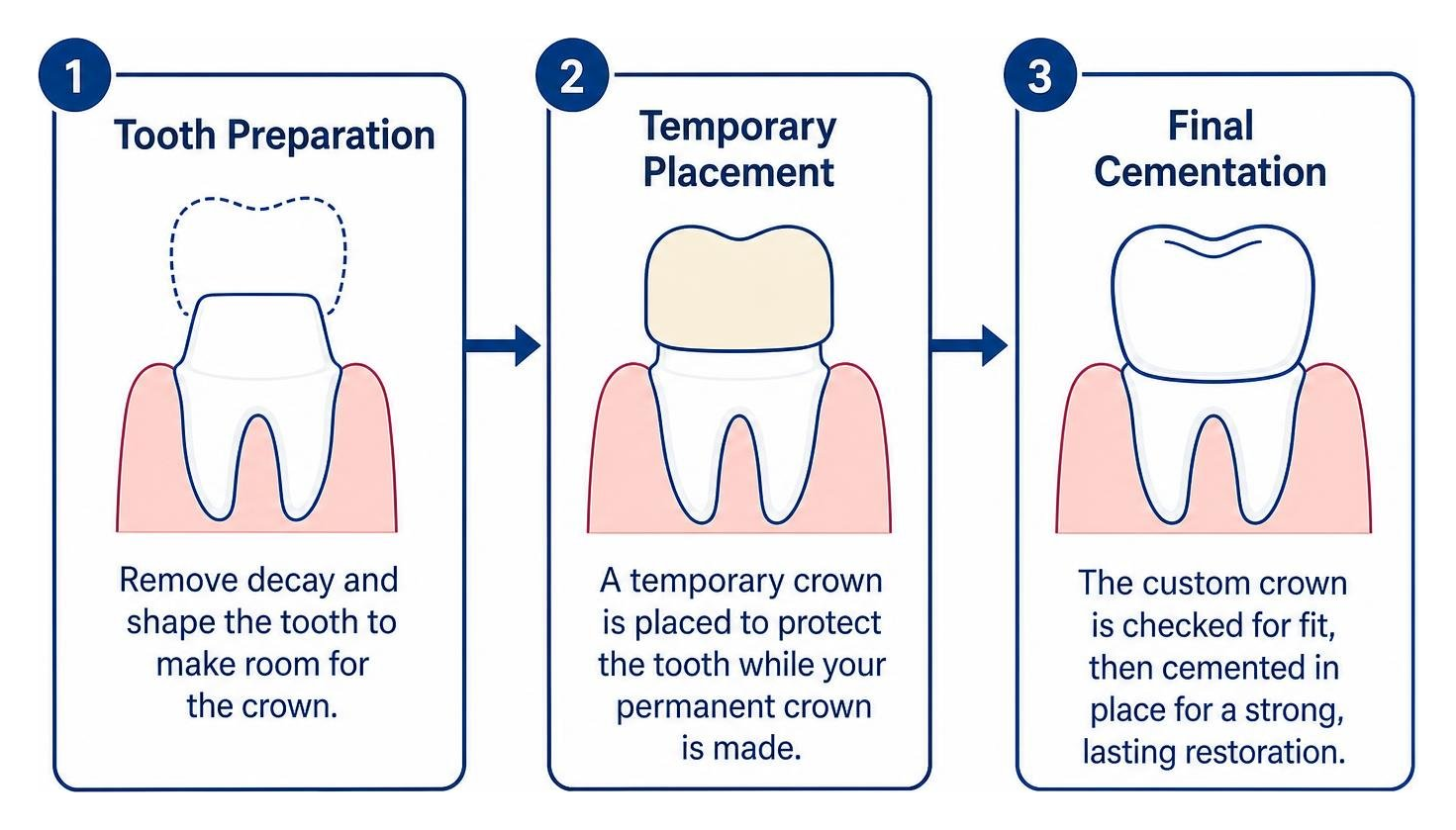
Receiving a custom crown is a straightforward restorative process typically completed over two comfortable appointments as part of routine general and family dentistry care.
Preparation, Impressions, and Fitting Appointments
- Examination and Anesthesia: We begin by thoroughly numbing the area with local anesthetic so you remain completely comfortable throughout the visit.
- Tooth Preparation: Any decayed or weakened tooth structure is carefully removed. The remaining tooth is shaped along the chewing surface and sides to make adequate room for the crown to seat flush with the gumline. If significant structure is missing, a composite core build-up is placed first to establish a solid foundation.
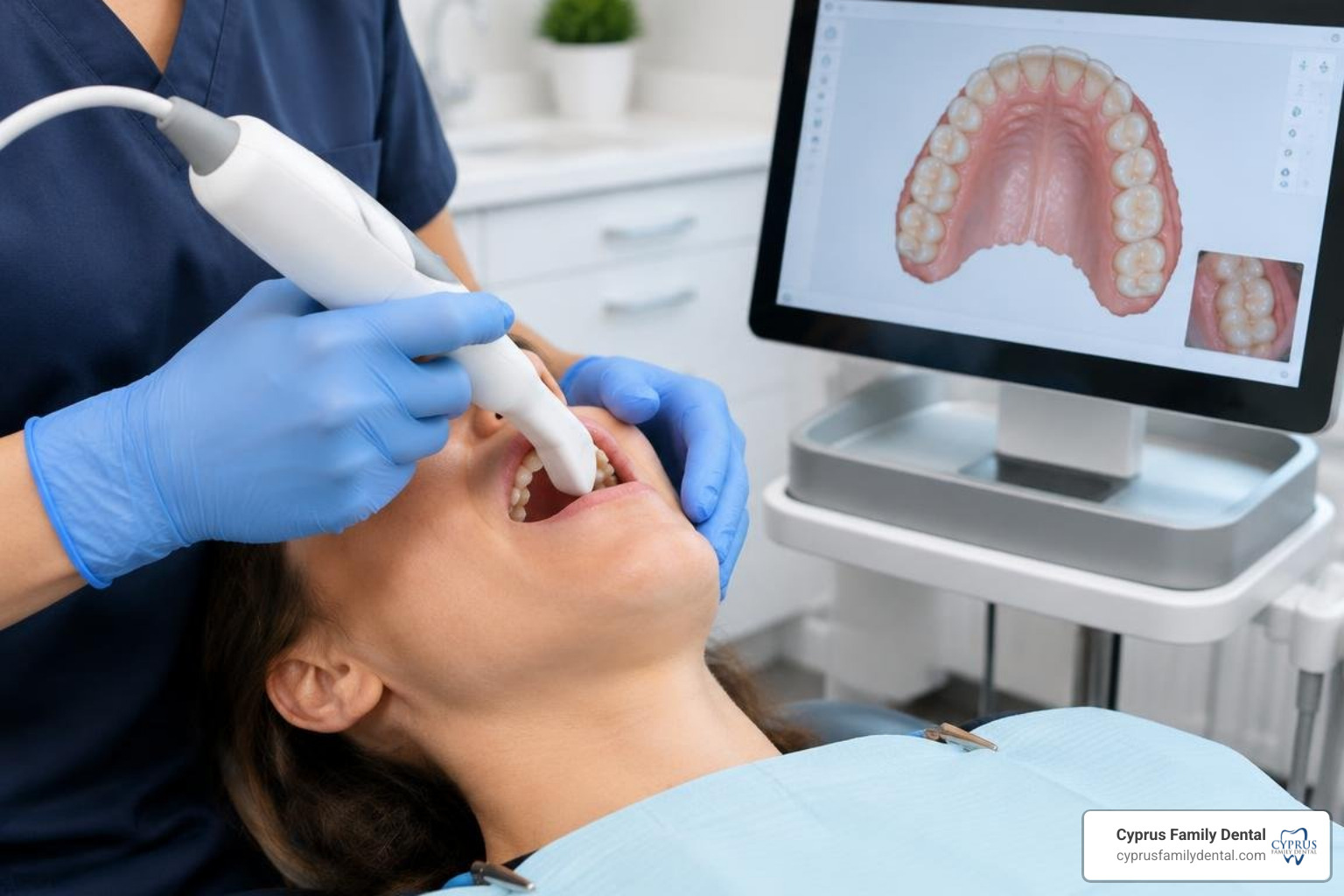
- Digital Scanning or Impressions: An intraoral digital scanner captures a high-resolution 3D virtual model of your prepared tooth and bite alignment. These digital files are sent directly to the dental laboratory.
- Temporary Crown Placement: While the dental lab meticulously mills and glazes your custom crown (a process that generally takes one to two weeks), a temporary acrylic crown is fitted using mild temporary cement. This protects the exposed dentin and keeps the tooth from shifting.
- Final Fitting and Bonding: At your second visit, the temporary cap is removed, and the prepared tooth is cleansed. We assess the permanent crown’s fit, contact points, margins, and shade. Once you and your dentist are satisfied with the look and bite, the crown is bonded into place using high-strength dental resin cement.
Managing Pain, Sensitivity, and Aftercare
The procedure itself is comfortable thanks to modern local anesthesia. Once the numbing wears off, it is normal to experience mild gum tenderness or slight temperature sensitivity for a few days to a couple of weeks. Over-the-counter pain relievers easily manage this initial adjustment period.
While wearing your temporary crown, avoid chewing sticky candies, chewing gum, or biting down on hard nuts that could dislodge the temporary adhesive. Once your permanent crown is seated, you can return to your regular diet, though biting directly into ice cubes or extremely hard objects should always be avoided to preserve your restorations.
Long-Term Maintenance, Potential Complications, and Alternatives
Dental crowns boast impressive success rates, but their longevity depends directly on your daily oral care routine and bite dynamics. Detailed clinical reviews, such as this Types, Costs, and Clinical Risks Guide, illustrate that proper hygiene is the single most important factor in preventing premature crown failure.
How Long Do Dental Crowns Last and How to Prevent Complications?
On average, a dental crown lasts between 10 and 15 years, with many high-quality restorations lasting upwards of 25 to 30 years when properly maintained. To maximize the lifespan of your dental crowns and bridges:
- Clean the Margins Diligently: Brush twice daily with fluoride toothpaste and floss daily around the base of the crown to remove plaque accumulation along the gumline.
- Use Interdental Brushes or Water Flossers: These tools are especially helpful for maintaining the tight spaces between crowned teeth and adjacent natural teeth.
- Wear a Protective Night Guard: If you grind or clench your teeth during sleep, a custom night guard cushions restorations against excessive bite pressure, preventing porcelain fractures.
- Maintain Routine Checkups: Regular cleanings allow your dental team to assess the marginal seal of your restorations and check for early signs of wear.
Restorative Alternatives: Inlays, Onlays, and Implants
If a tooth has sustained damage but retains strong outer walls, conservative partial-coverage options like ceramic onlays or composite bonding may preserve more natural enamel than a full crown.
Conversely, if a tooth has fractured below the bone level or suffered severe root resorption, restoring it may not be predictable. In such instances, performing a gentle extraction followed by dental implants provides a freestanding replacement that preserves adjacent healthy teeth without requiring their reduction.
Frequently Asked Questions
Does getting a crown hurt?
No. The entire procedure is performed under local anesthesia, ensuring the tooth and surrounding soft tissues are fully numb. You may feel gentle vibration or pressure during tooth preparation, but no sharp discomfort. Any mild gum soreness after your visit can be managed with standard over-the-counter pain relievers.
What should I do if my crown falls off or chips?
If a permanent or temporary crown comes loose, keep the restoration clean and store it in a small container. Contact your dental clinic promptly to schedule an evaluation. Never use household superglue or hardware adhesives to reattach a crown at home, as this can permanently damage the restoration, irritate the nerve, and cause gum toxicity. Your dentist can professionally clean, inspect, and recement the restoration.
Can a crowned tooth still develop a cavity underneath?
Yes. While the porcelain or zirconia crown itself cannot decay, the natural tooth structure underneath remains susceptible to cavities—particularly along the margin where the crown meets the tooth root. If plaque gathers along the gumline, bacteria can seep beneath the restoration, undermining the internal core. Diligent daily flossing and regular dental cleanings are essential for preventing marginal decay.
Conclusion
Restoring a damaged or weakened tooth protects your smile’s long-term health, comfort, and appearance. Modern restorative materials allow custom crowns to match natural enamel while providing the structural strength needed for everyday chewing.
At Cyprus Family Dental, we are dedicated to providing gentle, patient-centered care for families across Magna, UT. Whether you are dealing with a cracked tooth, an aging filling, or exploring what exactly are dental crowns and bridges, our friendly team is here to help you achieve a functional, healthy smile. Schedule your consultation with us today to discuss your restorative options.