

How Veneers Can Transform Your Smile
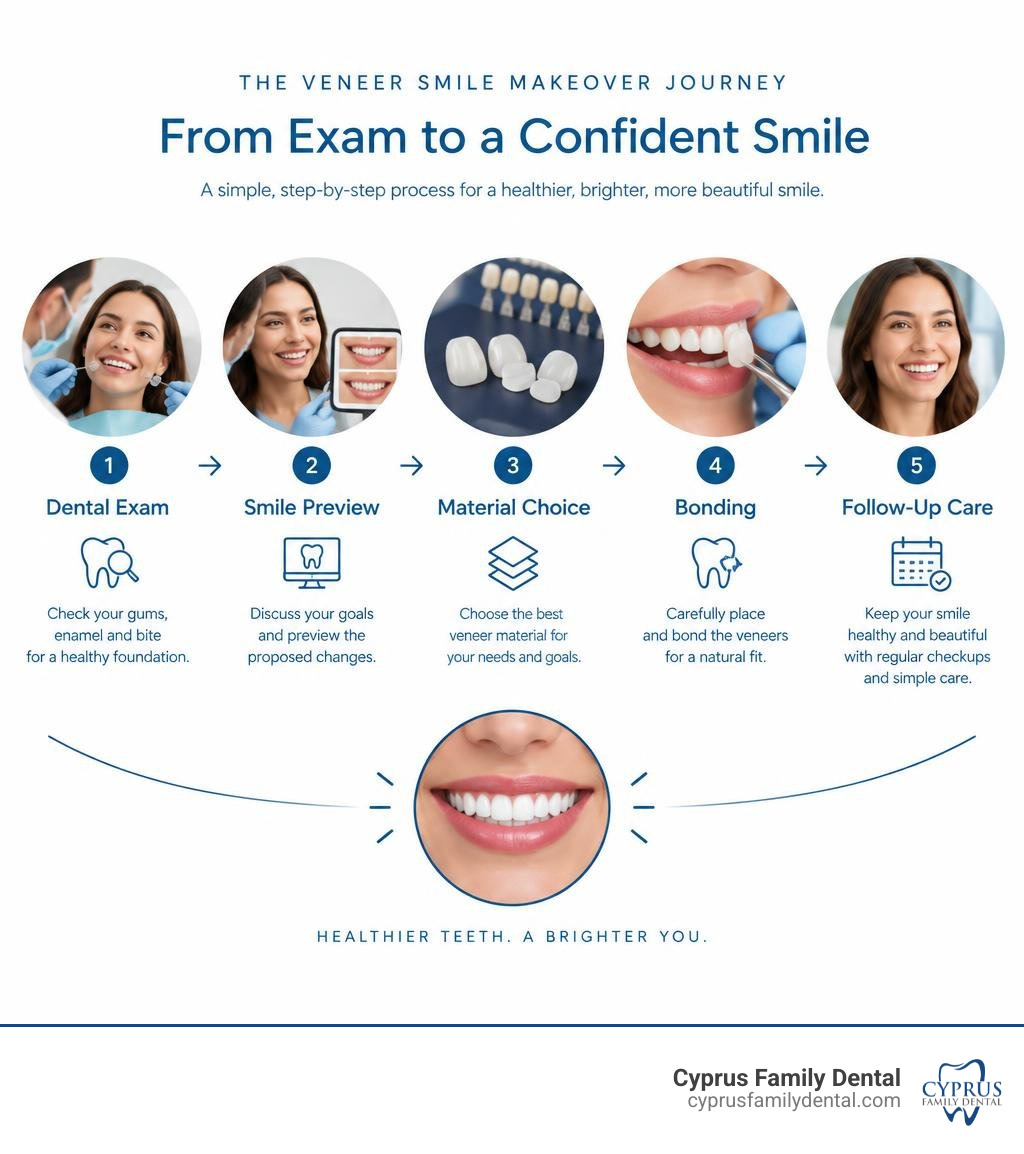
Veneers for a smile makeover can improve the color, shape, and spacing of visible teeth. They may be a good fit for chips, stubborn stains, small gaps, or uneven edges. Start with a dental exam to check your gums, enamel, and bite. Then discuss the look you want and preview the proposed changes before choosing a veneer material.
Veneers are not right for every tooth. A plan that protects your natural teeth matters as much as the final look.
Why Choose Veneers for Smile Makeover Transformations
When you look in the mirror, your smile is often the very first feature you notice. It plays a central role in facial harmony, framing how your expressions, warmth, and personality are perceived. Over time, however, teeth can experience wear and tear. Enamel hypoplasia (underdeveloped enamel), severe fluorosis, intrinsic discoloration, and minor misalignment can take a toll on both dental health and self-confidence.
In our modern practice, we view veneers as an exceptional tool within cosmetic dentistry solutions because they address multiple aesthetic concerns simultaneously. Rather than undergoing separate treatments for minor crowding, chipped incisal edges, and deep tetracycline stains, carefully engineered veneers can solve all of these challenges at once.

Beyond structural correction, the personal impact of a refreshed smile is profound. Patients often seek veneers for smile makeover transformations when approaching major life milestones—such as weddings, career transitions, milestone birthdays, or anniversaries. In fact, many cosmetic specialists note that restoring the natural proportions and light reflection of worn teeth can support the lower third of the face, creating a rejuvenated appearance. As noted in expert perspectives on smile makeover timing, patients of all ages find that enhancing their smile provides an emotional and professional boost that lasts for years.
Comparing Veneer Materials: Porcelain, Lithium Disilicate, and Composite
Choosing the right veneer material is a collaborative decision based on your clinical needs, aesthetic goals, and bite dynamics. Today’s restorative materials offer lifelike translucency, mimicking natural enamel while resisting daily chewing forces.
| Material Type | Flexural Strength | 10-Year Clinical Survival Rate | Typical Chair Time | Aesthetic Translucency & Polish |
|---|---|---|---|---|
| Direct Composite | 120–160 MPa | Moderate (regular polishing required) | 1 Visit (approx. 3.5 hours) | High initial shine; requires periodic repolishing |
| Feldspathic Ceramic | 70–100 MPa | 88.2% (over 8.2 years) | 2–3 Visits (Lab-crafted) | Outstanding vitality; traditional aesthetic gold standard |
| Leucite-Reinforced Glass | 160–180 MPa | 91.5% (over 9.0 years) | 2 Visits (Lab or CAD/CAM) | Excellent optical blending for anterior teeth |
| Lithium Disilicate (e.g., e.max) | 350–400 MPa | 96.81% (over 10.4 years) | 2 Visits (Lab or CAD/CAM) | Exceptional natural vitality with superior fracture resistance |
| Zirconia-Based Ceramic | 900–1200 MPa | 94.3% (over 9.8 years) | 2 Visits (Milled) | High opacity; best suited for masking dark underlying stumps |
Evaluating Material Durability and Aesthetics in Veneers for a Smile Makeover
Lithium disilicate has quickly become a premier choice for indirect anterior restorations. With a flexural strength between 350 and 400 MPa, it provides an ideal balance between high mechanical durability and lifelike optical properties. As highlighted in research on lithium disilicate veneer performance, lithium disilicate veneers demonstrate a 96.81% survival rate over a 10.4-year span, outperforming traditional feldspathic options while preserving enamel through conservative preparation (Villalobos-Tinoco et al., 2025).
For patients seeking handcrafted, highly personalized restorations, custom porcelain veneers provide unmatched depth of color, mimicking the natural halo effects and light gradients of pristine enamel.
On the other hand, direct composite veneers offer a direct chairside alternative. Using modern nano-hybrid composites with spherical fillers, we can sculpt and polish restorations in a single appointment—often completed in about 3.5 hours without lab wait times. A clinical study evaluating direct composite veneers for enamel defects showed that after two years of follow-up, restorations maintained complete structural integrity with zero fractures, chipping, or marginal discoloration (Korkut, 2018). While composite resin may require repolishing over time, it remains a conservative, repairable, and cost-effective smile makeover option.
Indications and Contraindications for Candidates
To ensure long-term clinical success, we perform a thorough diagnosis before recommending treatment:
Primary Indications:
- Moderate to severe tooth discoloration (fluorosis, tetracycline staining) that does not respond to bleaching.
- Chipped, worn, or uneven incisal edges caused by mild wear or past trauma.
- Closing diastemas (spaces between teeth) and creating balanced tooth proportions.
- Minor crowding or tooth rotation when orthodontic treatment is not preferred.
- Restoring teeth affected by enamel hypoplasia or developmental surface anomalies.
Contraindications:
- Insufficient enamel: Veneers rely on a strong bond to enamel; teeth with excessive dentin exposure may require full-coverage crowns instead.
- Severe untreated bruxism: Heavy clenching or grinding without a protective nightguard can lead to ceramic fractures.
- Active oral disease: Untreated periodontal pockets or active caries must be resolved before cosmetic work begins.
- Severe malocclusion or crossbite: Heavy edge-to-edge bites place excessive stress on thin porcelain margins.
Step-by-Step Procedure: How Dentists Design and Bond Veneers
The process of crafting custom veneers blends artistic design with precise dental science. If you have ever wondered how a smile transformation unfolds, here is the clinical workflow we follow:
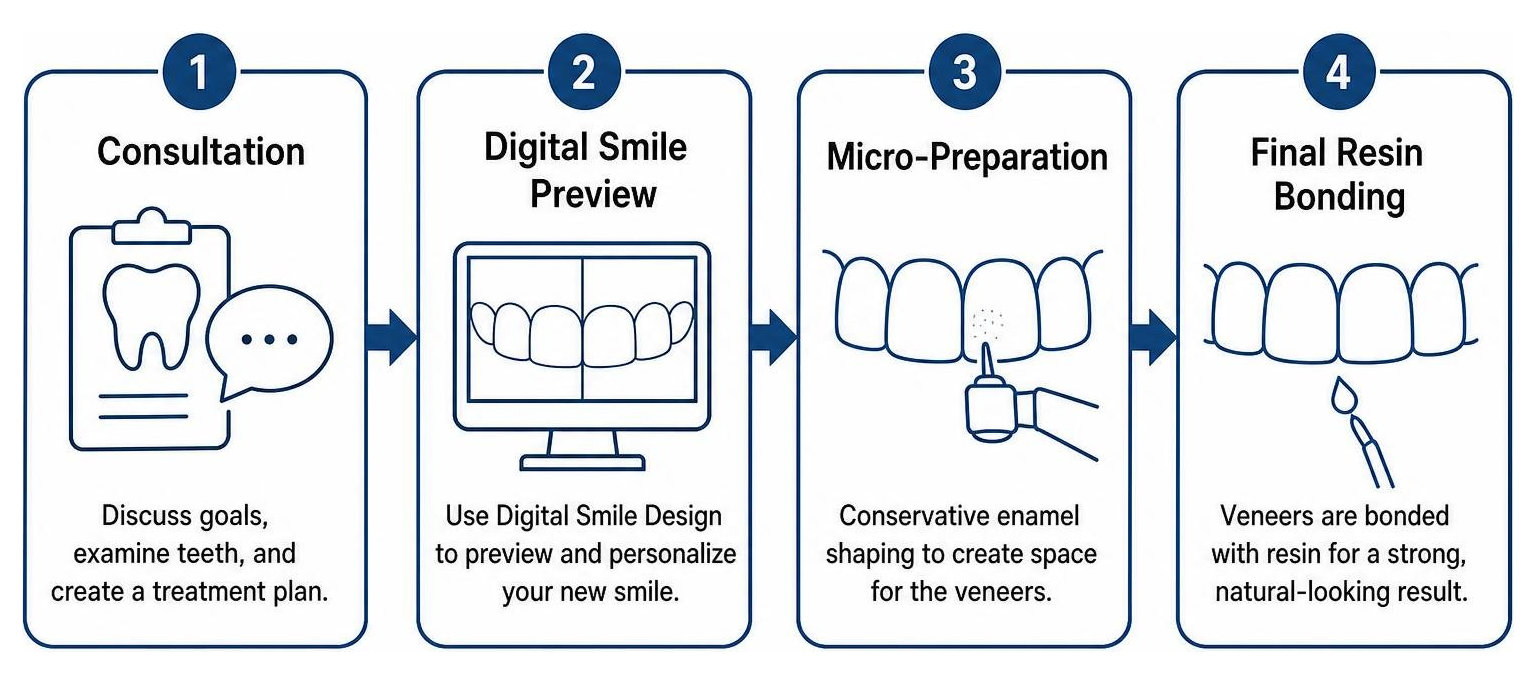
For a deeper dive into the fundamentals of treatment, our detailed guide to dental veneers walks you through every stage of preparation and care.
The Role of Digital Smile Design in Planning Veneers for Smile Makeover Cases
Modern cosmetic dentistry relies on comprehensive digital planning. Through Digital Smile Design (DSD), we combine high-resolution facial photography, 3D intraoral digital scans, and video analysis of your lip dynamics.
This data allows us to evaluate facial symmetry and design the length, width, and contours of your new teeth before touching any enamel. We then translate this virtual design into a physical diagnostic wax-up. Using a custom silicone index, we can place a temporary “trial smile” directly over your existing teeth. This lets you see, test, and approve your new look in real-time, ensuring the final result matches your expectations perfectly.
Tooth Preparation, Impression, and Adhesive Bonding Protocols
Once the blueprint is approved, we proceed with the clinical bonding steps:
- Enamel Preparation: Using micro-depth reduction burs, we conservatively remove roughly 0.3 mm to 0.5 mm of surface enamel, creating a smooth chamfer margin at the gumline. Staying within the enamel layer maximizes long-term bond strength.
- Digital Impressions: We capture high-precision digital scans of the prepared teeth and send the data directly to our master dental ceramists.
- Provisionalization: You wear custom temporary veneers crafted from your diagnostic wax-up while your permanent restorations are fabricated.
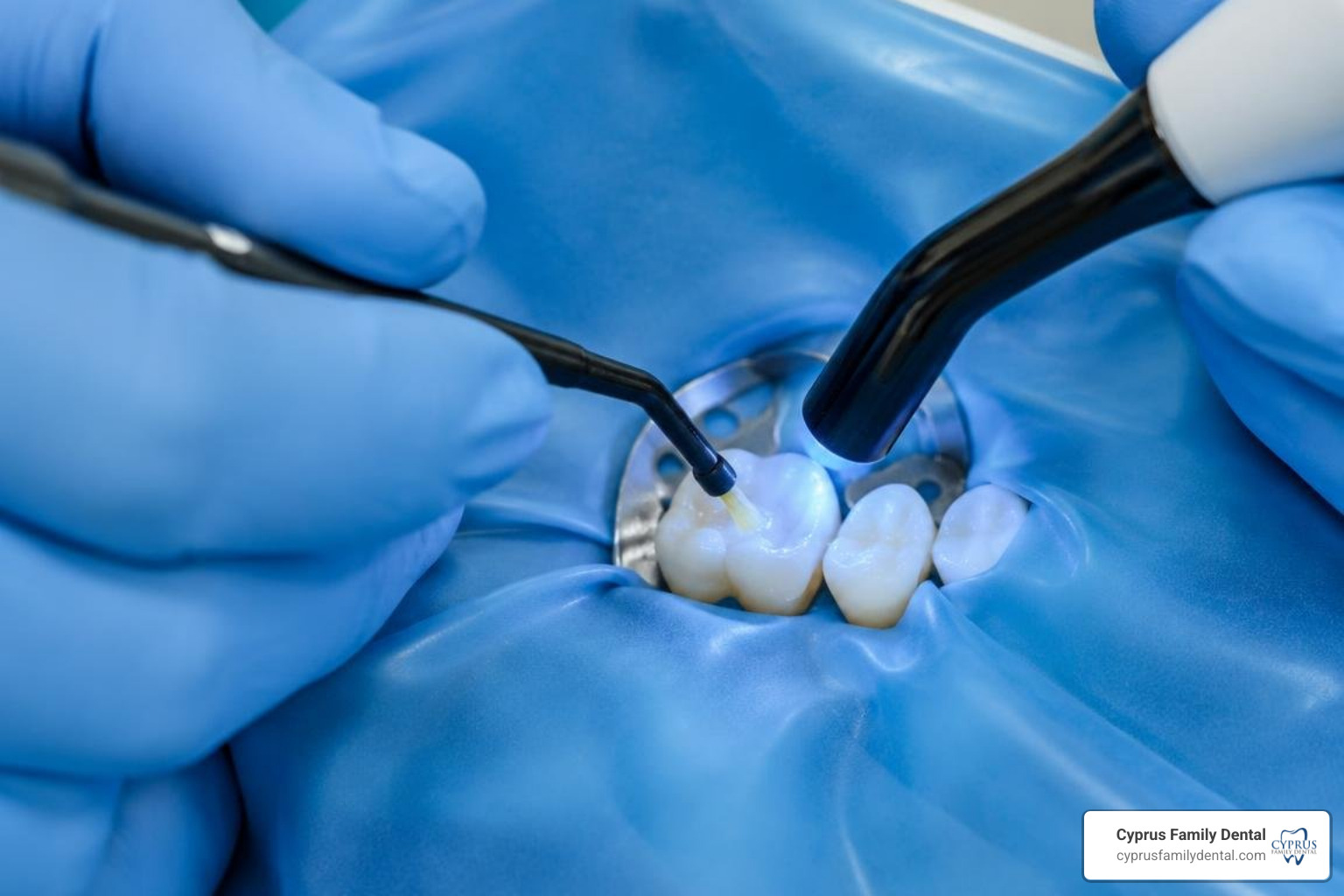
- Surface Treatment: At the delivery visit, we clean the prepared teeth and isolate them to prevent moisture contamination. The inner surface of each lithium disilicate veneer is etched with 5% hydrofluoric acid for 20 seconds, rinsed, dried, and coated with a silane coupling agent.
- Adhesive Cementation: We treat the enamel using a total-etch protocol (37% phosphoric acid) and apply a light-cured universal bonding agent. The veneers are seated using light-cured resin cement.
- Eliminating the Oxygen-Inhibition Layer: Before final light polymerization, we apply a clear glycerin gel over the margins. This blocks atmospheric oxygen, ensuring the resin cement cures completely at the restoration edges to prevent microleakage and staining.
Longevity, Oral Health Impacts, and Preventing Complications
A successful smile makeover should protect your oral health while enhancing its beauty. With proper hygiene and regular visits, ceramic veneers regularly deliver 10 to 15+ years of dependable performance. Maintaining this longevity involves following routine post-treatment cosmetic dental care protocols.
Managing Gum Health, Sensitivity, and Occlusal Forces
- Gingival Health: We design the margins of your veneers to sit right at or slightly above the gumline (equigingival or supragingival). This prevents biological width violation, keeping your gums pink, firm, and easy to floss.
- Managing Sensitivity: Mild sensitivity to hot or cold temperatures is common for a few days following tooth preparation and bonding. Because our preparations stay within the enamel, pulpal inflammation is minimized, and symptoms typically resolve quickly.
- Guarding Against Bruxism: While lithium disilicate resists everyday chewing forces, nighttime clenching can place high lateral stresses on your teeth. We custom-fit an occlusal nightguard to cushion your restorations and protect your investment while you sleep.
Veneers vs. Alternative Cosmetic Dental Treatments
Veneers are one of several ways to transform your smile. Here is how they compare to other common cosmetic solutions:
- Professional Teeth Whitening: In-office teeth whitening is a conservative, non-invasive way to brighten natural enamel. However, whitening cannot alter tooth shape, close gaps, repair chips, or lift deep internal discoloration.
- Clear Aligner Orthodontics: Clear aligners straighten crowded or rotated teeth and correct bite misalignments. While orthodontics optimizes tooth position, it does not change the physical color, size, or surface texture of worn enamel. Many patients combine both, using aligners first to align their arches followed by minimal-prep veneers.
- Direct Composite Bonding: Composite resin bonding repairs isolated chips or small gaps in a single appointment. While fast and economical, composite is more prone to surface staining over time compared to glaze-fired dental porcelain.
Frequently Asked Questions About Veneers for Smile Makeovers
How long do porcelain veneers last compared to direct composite?
Porcelain and lithium disilicate veneers typically last 10 to 15 years or longer due to their high flexural strength (350–400 MPa) and non-porous, stain-resistant surface. Direct composite veneers generally have a lifespan of 5 to 7 years. While composite can be completed in a single visit and repaired easily chairside, it requires periodic repolishing to maintain its initial luster and resist surface wear.
Does getting dental veneers ruin your natural teeth?
No, modern veneer procedures do not ruin your teeth. When performed by an experienced cosmetic dentist, tooth preparation is conservative, usually removing only 0.3 mm to 0.5 mm of surface enamel. Preserving your natural enamel creates a durable foundation for adhesive bonding while keeping the inner dentin and nerve tissue protected and vital.
How do dentists ensure veneers look natural rather than bulky?
Natural-looking veneers rely on precise digital planning and artistic material layering. By using digital smile previews, diagnostic wax-ups, and conservative enamel reduction, we ensure your restorations sit flush with your natural gumline. Modern ceramics incorporate internal shade gradients, delicate surface micro-textures, and optical translucency that reflect light just like healthy, natural enamel.
Conclusion
A well-planned smile makeover combines cosmetic artistry with restorative dental science. Whether you want to repair minor chips, close gaps, or achieve a uniform, luminous shade, veneers offer a conservative, long-lasting solution tailored to your facial aesthetics.
At Cyprus Family Dental, our team is dedicated to providing gentle, high-quality care using modern digital workflows for patients throughout Magna, UT. Schedule a consultation with us today to explore what dental veneers can do for you and take the first step toward a radiant, confident smile.
References
Korkut B. “Smile makeover with direct composite veneers: A two-year follow-up report..” Journal of dental research, dental clinics, dental prospects, 2018. PMCID PMC6076883. Villalobos-Tinoco J, Floriani F, Rojas-Rueda S, Mekled S, Conner C, Colvert S, Jurado CA. “Enhancing Smile Aesthetics and Function with Lithium Disilicate Veneers: A Brief Review and Case Study..” Clinics and practice, 2025. PMCID PMC11941156.