

When a Dental Onlay Can Save More of Your Tooth
If you are looking into dental onlays in Magna, UT, the key question is how much of your tooth needs repair. A porcelain inlay fits between the raised points, or cusps, of a tooth. An onlay covers one or more cusps. When damage is too large for an inlay but the tooth does not need a full crown, an onlay may protect it while keeping more of the natural tooth.
A dental exam can show whether the remaining tooth is strong enough for an onlay. The dentist will check the damage and your bite before recommending a restoration.
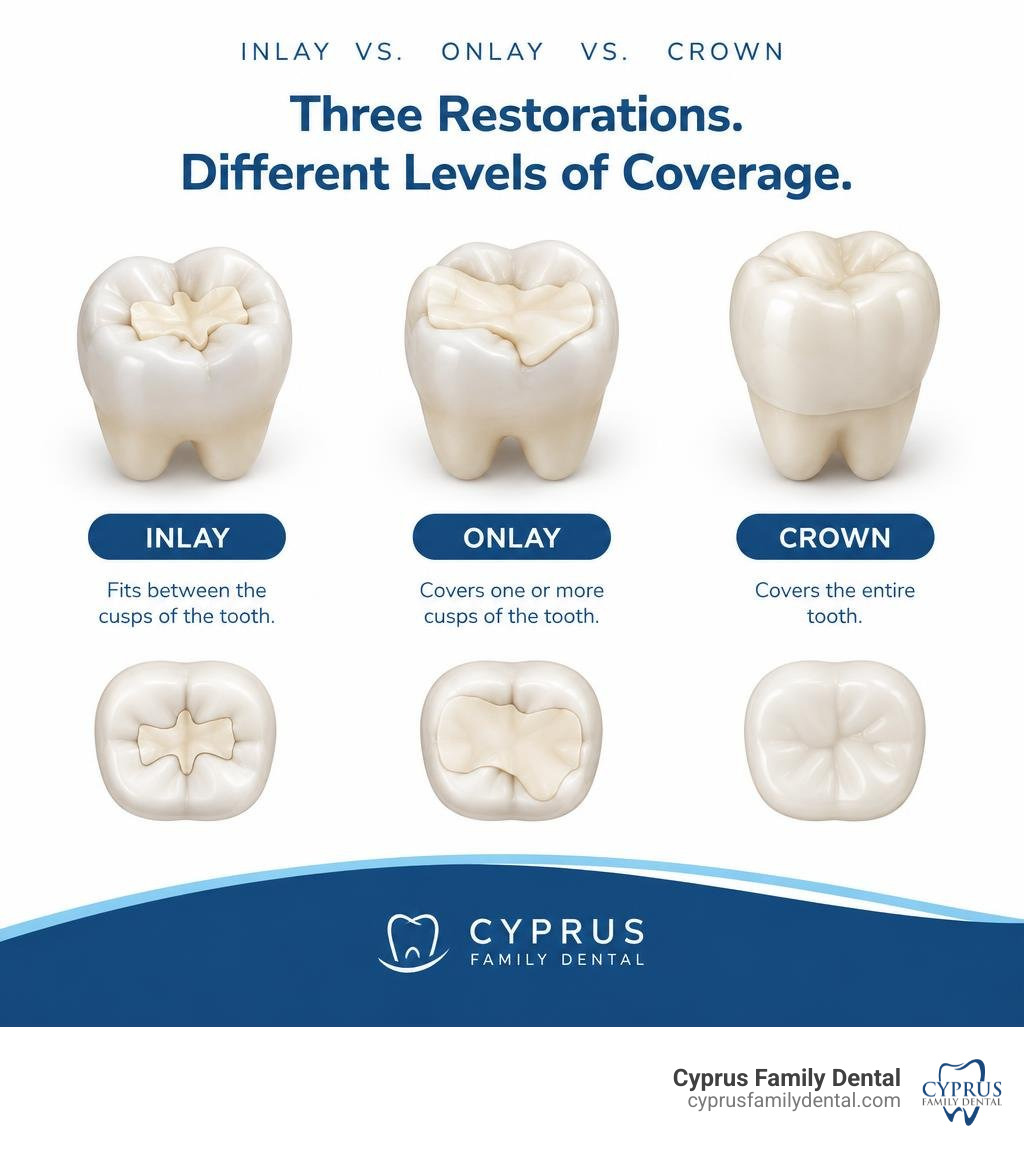
Understanding Inlays, Onlays, and Full Dental Crowns
When a tooth suffers damage from decay, old failing restorations, or physical trauma, modern dentistry offers several ways to rebuild it. Choosing the right restoration comes down to balancing structural strength with the preservation of your natural enamel.
To understand why an onlay is often called a “partial crown,” it helps to look at the anatomy of your back teeth—the molars and premolars. The chewing surface of these teeth features elevated peaks called cusps and natural valleys or grooves between them. These cusps bear hundreds of pounds of pressure every single day when you chew.
- Dental Fillings: Best for small areas of decay located entirely within the tooth structure.
- Inlays: Custom-fabricated pieces that fit precisely inside the center grooves of the tooth, resting within the cusps without covering any chewing points.
- Onlays: Extensive restorations that rebuild one or more damaged cusps, shielding the chewing surface from splitting forces.
- Full Crowns: Caps that completely cover the entire visible portion of the tooth down to the gumline.
Understanding what dental crowns and bridges are helps highlight how extensive a full crown can be. While a traditional crown requires trimming away a significant amount of natural enamel on all sides to create a supportive peg, an onlay preserves every bit of healthy, undamaged tooth structure possible.
| Restoration Type | Area of Tooth Restored | Enamel Removal Required | Primary Indication |
|---|---|---|---|
| Standard Filling | Minor internal cavities | Minimal | Small decay with strong surrounding walls |
| Inlay | Grooves between cusps | Low to Moderate | Moderate decay without cusp involvement |
| Onlay | One or more chewing cusps | Moderate (Targeted) | Weakened cusps, fractures, or moderate-to-large decay |
| Full Crown | Entire visible tooth structure | High (360-degree reduction) | Severe decay, root canal therapy, or total structural failure |
Inlays vs. Onlays: Key Differences
While people often hear the terms mentioned together, inlays and onlays solve different dental problems.
An inlay sits snugly inside the valley between the cusps, functioning much like an ultra-durable, custom-molded filling. It does not alter or rebuild the outer chewing points of your tooth.
An onlay, on the other hand, extends over the edges to reconstruct one, two, or even all of the cusps. Because it caps the chewing surface, it absorbs vertical bite pressure and disperses stress evenly across the tooth root. If you think of an inlay as filling a pothole in a road, an onlay repaves the lane and rebuilds the curb to keep the road from collapsing under heavy traffic.
When Tooth Damage Calls for More Than a Standard Filling
Direct composite fillings are fantastic for small cavities, but they rely heavily on the remaining walls of your natural tooth to stay supported. When decay removes more than half of the tooth’s width, packing in a large filling acts like a wedge. Over time, normal chewing forces press down on that large filling, forcing the remaining thin walls of enamel outward until the tooth cracks.
Recognizing the signs you might need a crown—such as sharp pain when biting down, visible fracture lines, or large, crumbling silver fillings—often marks the moment you need advanced restorative care. However, rather than jumping straight to grinding down the entire tooth for a crown, our team evaluates whether an onlay can protect the vulnerable cusps while keeping the rest of your healthy tooth intact.
Why Patients Choose Dental Onlays in Magna, UT Over Traditional Crowns
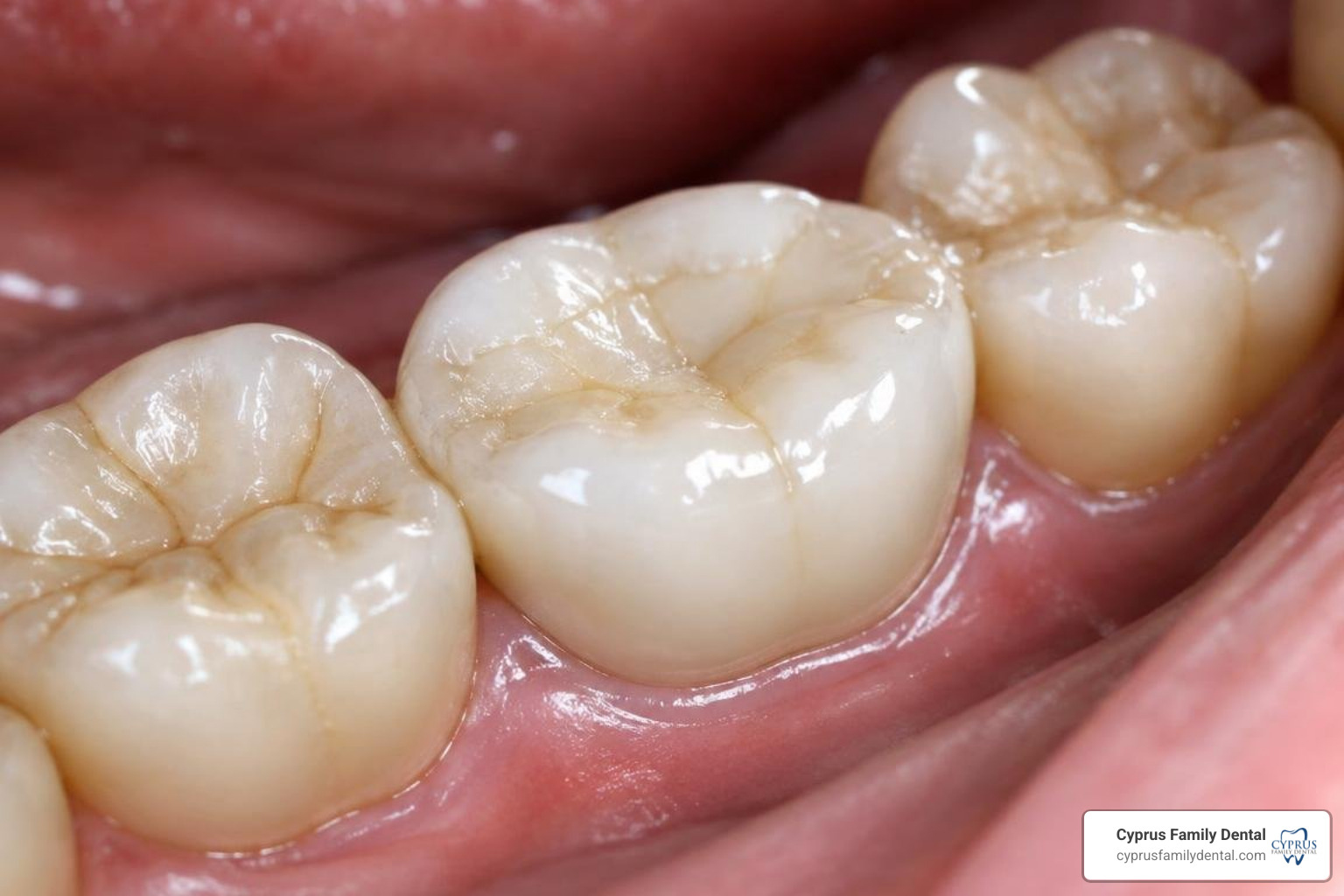
Preserving natural enamel is one of the top priorities in modern, conservative dentistry. Enamel is the hardest substance in the human body, and once it is shaved away, it is gone forever. This is where an onlay shines.
When placing full custom dental crowns and bridges, a dentist must remove 60% to 75% of the tooth’s natural crown structure to make room for the restoration material. In contrast, an onlay allows us to remove only the decayed or structurally compromised portions. The healthy natural walls, along with the natural margin above the gumline, remain untouched.
Keeping your natural tooth structure intact offers major clinical benefits:
- Pulp Protection: Less drilling means less trauma to the living dental nerve inside the tooth, greatly reducing the risk of post-treatment sensitivity or the need for future root canal treatment.
- Gum Health: Onlay margins typically sit well above the gumline, preventing the soft tissue irritation that sometimes occurs with full crowns.
- Superior Bonding: Modern adhesive dentistry bonds high-strength ceramic directly to your natural enamel, creating a unified structure that restores up to 90% of the tooth’s original strength.
What to Expect During Direct vs. Indirect Dental Onlays in Magna, UT
Depending on your specific clinical needs, onlays can be crafted and placed using either direct or indirect techniques.
- Direct Onlays (Single-Visit): For select composite restorations or in-office ceramic fabrications, the dentist removes the decay, prepares the tooth, applies resin or scans the tooth digitally, mills or cures the material, and bonds it into place during a single appointment.
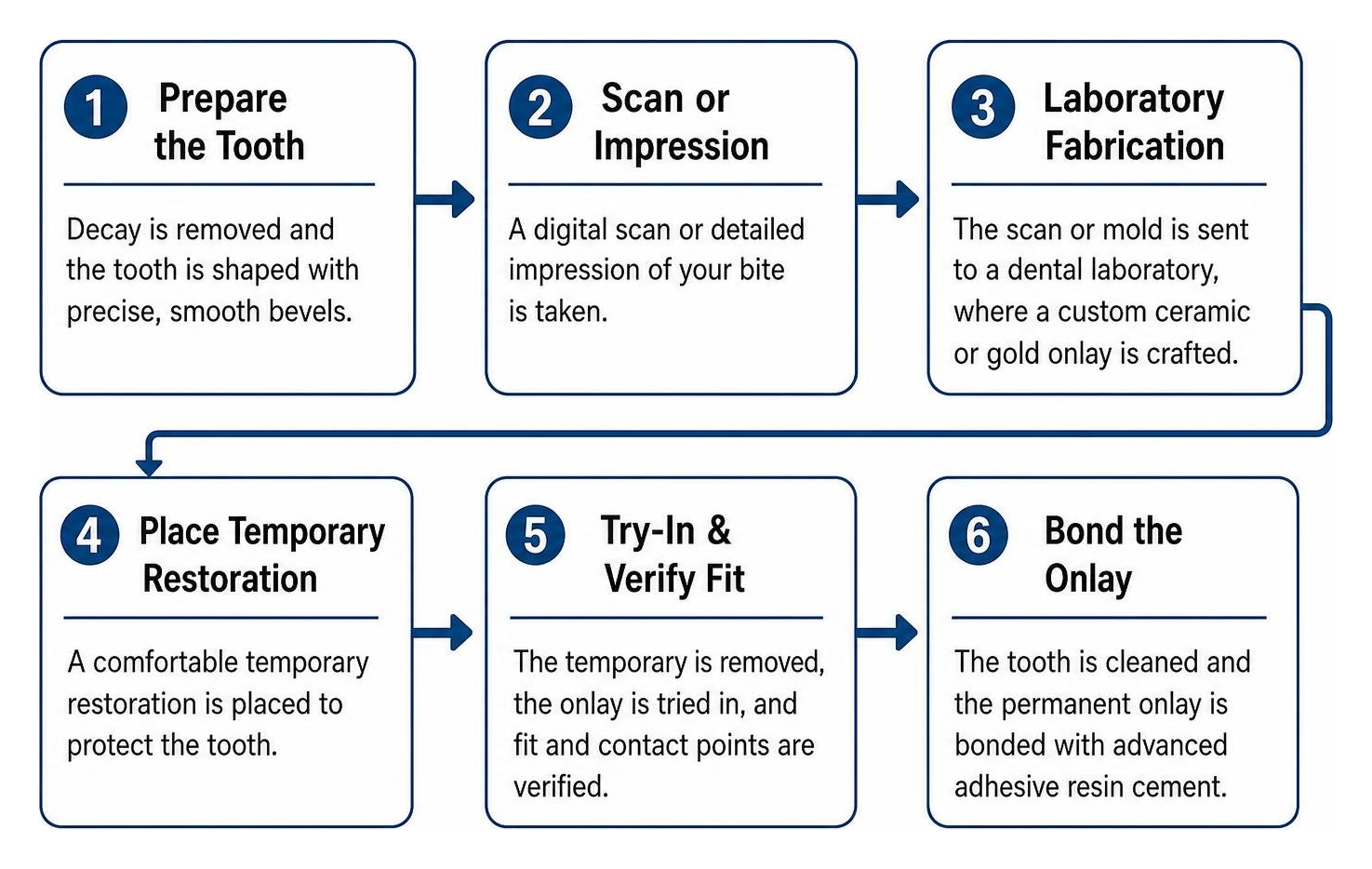
- Indirect Onlays (Two-Visit Laboratory Process):
- First Visit: The tooth is numbed, cleared of all decay, and shaped with precise, smooth bevels. We capture a digital scan or detailed impression of your bite and place a comfortable temporary restoration.
- Laboratory Fabrication: The digital design or physical mold is sent to an experienced dental laboratory, such as Tempus Dental Laboratory, where skilled dental technicians craft a custom, high-strength ceramic or gold restoration matched to your exact bite.
- Second Visit: We remove the temporary cover, clean the tooth, verify the fit and contact points, and bond the permanent onlay using advanced adhesive resin cements.
Comparing Restoration Materials: Porcelain, Gold, and Composite
Onlays can be fabricated from several durable materials, each offering unique strengths:
- Porcelain / High-Strength Ceramics (Lithium Disilicate or Zirconia): The gold standard for modern restorations. Ceramic mimics the translucency, color variations, and light-reflecting qualities of natural enamel. It resists wear, does not stain, and expands and contracts at rates very similar to natural tooth structure.
- Cast Gold Alloys: Unmatched in biocompatibility and longevity. Gold expands at the exact same rate as enamel, is gentle on opposing teeth during heavy grinding, and will never fracture or chip. While its metallic color makes it less common for visible areas, it remains an exceptional choice for hidden back molars.
- Composite Resin: A blend of medical-grade plastic and fine glass particles. While slightly less wear-resistant over decades compared to lab-grade ceramics, direct composite onlays offer a cost-effective, easily repairable solution that can often be completed in one visit.
How Onlays Benefit Oral Hygiene and Smile Esthetics
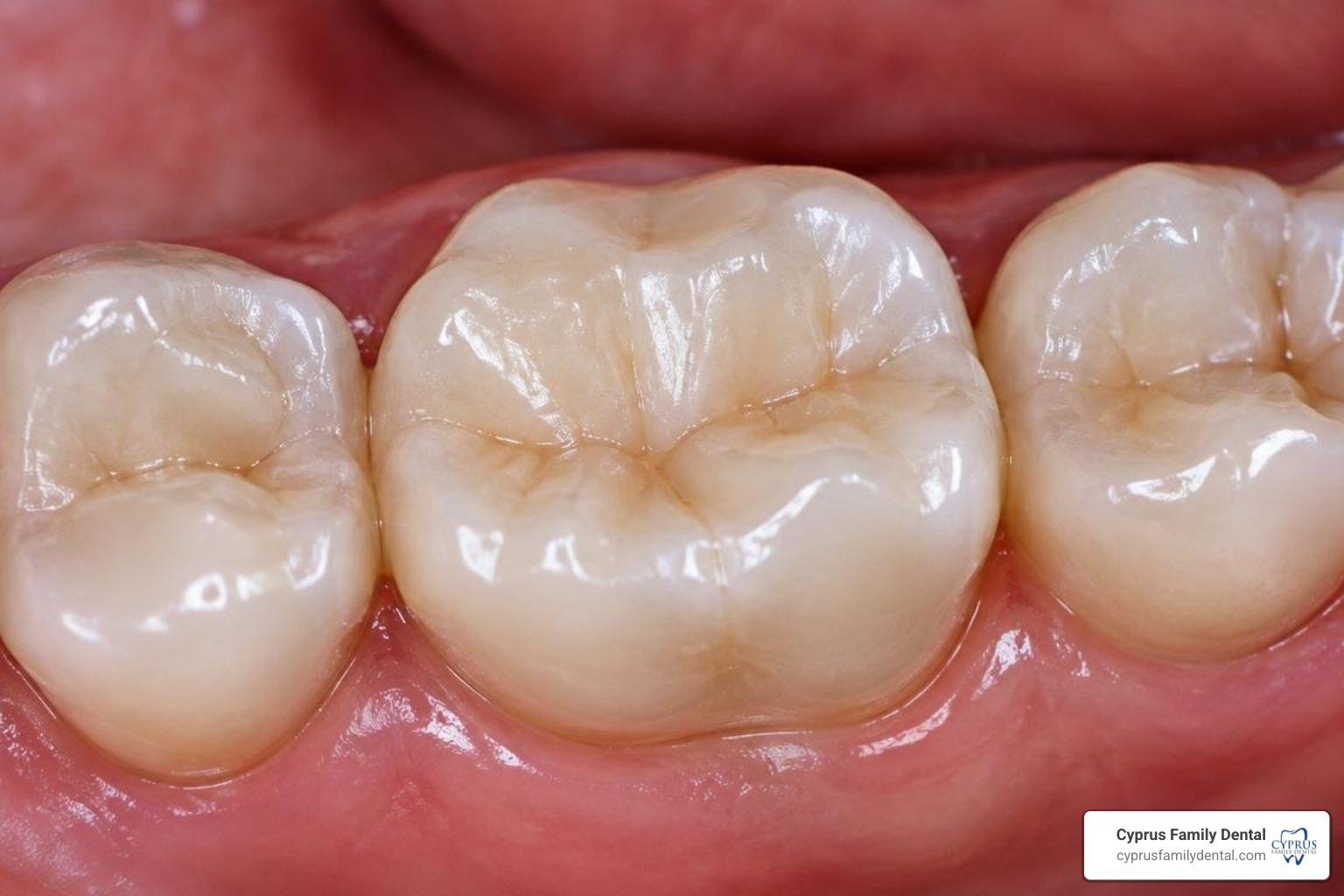
A major advantage of dental onlays is how seamlessly they integrate into your daily oral hygiene routine.
Because an onlay leaves your natural gumline untouched, there are no artificial ledges hidden below the gums where food debris and plaque can hide. Flossing feels natural and smooth, sliding between the contact points just like it does between healthy, untouched teeth. This easy access supports long-term periodontal health and makes your regular preventive general and family dentistry checkups straightforward and comfortable.
From an esthetic perspective, ceramic onlays are virtually undetectable. We match the shade, translucency, and natural surface characterizations of the restoration to your surrounding teeth. If you have old, discolored silver amalgam fillings that make you feel self-conscious when you laugh or yawn, replacing them with custom tooth-colored onlays brightens your smile while reinforcing your bite.
Frequently Asked Questions About Restorative Care
How Long Do Dental Onlays in Magna, UT Last?
With proper care, dental inlays and onlays can last for 10 years or longer. Their actual lifespan depends on several factors:
- The quality of the material selected (high-strength ceramics and gold offer the greatest durability).
- The location of the tooth and the natural chewing forces it endures.
- Whether you clench or grind your teeth (a nightguard can protect your restorations).
- Your commitment to daily brushing, flossing, and attending biannual dental exams.
Is Getting a Dental Onlay Painful?
Not at all. The procedure is comfortable and minimally invasive. We administer local anesthetic to thoroughly numb the tooth and surrounding gums before removing any decay or shaping the enamel. Because an onlay preserves more enamel and avoids deep trimming near the dental pulp, patients experience far less post-operative temperature sensitivity than they typically would with a full crown.
How Do I Know If I Am a Candidate for an Onlay?
You may be an ideal candidate for an onlay if you have:
- A fractured or cracked tooth cusp that does not extend deep beneath the gumline.
- Moderate-to-severe decay that is too extensive for a basic composite filling.
- An old, failing amalgam or composite filling that needs replacement without sacrificing remaining healthy enamel.
- Sufficient healthy tooth structure remaining to support adhesive bonding.
If you are unsure which treatment is right for your smile, finding a highly rated restorative dentist nearby for a comprehensive exam is the best first step.
Conclusion
When tooth damage strikes, you don’t always need to grind away healthy enamel for a full crown. Dental onlays provide a conservative, exceptionally strong, and visually seamless alternative that protects your bite for years to come.
At Cyprus Family Dental, we are dedicated to providing gentle, patient-centered care for your entire family using the latest modern dental techniques. Whether you need a simple checkup or advanced restorative care, we take the time to evaluate your unique smile and recommend conservative treatments that keep your teeth strong and healthy. Contact Cyprus Family Dental today to schedule your consultation and discover how conservative restorative care can revitalize your oral health.